
The British Midcentury Novel
A shared condition, not a school: the English novel between modernism and 1975, watching empire end.
This is less a movement than a shared condition: the English novel working the decades between High Modernism and the 1975 generation that inherited it, watching an empire end. E. M. Forster's A Passage to India renders the impossibility of genuine connection across the colonial divide, ending on an unresolved 'not yet, not there' that lands harder than outrage would. Evelyn Waugh answered with savage comedy: A Handful of Dust dissolves an English gentleman's marriage and class into a jungle captivity so absurd it reads as punishment for believing in civility.
Graham Greene sent whisky priests and guilt-ridden Catholics through Mexico's anticlerical terror in The Power and the Glory, sin and grace refusing to stay in separate rooms. William Golding stripped the tradition down to its cruelest experiment: Lord of the Flies maroons English choirboys on an island and watches civilization's veneer come off in days. Muriel Spark and Iris Murdoch supplied the era's sharpest moral comedy, Miss Jean Brodie's charisma curdling into something closer to fascism in a girls' school, while the Angry Young Men brought a provincial grudge against the whole polite tradition.
How to spot it on the page
- Empire's end registered as a personal failure of connection or nerve, not a headline
- Whisky priests, lapsed Catholics, and guilt refusing to separate itself from grace
- A closed community (island, school, colonial outpost) stripped down to a cruel experiment
- Charisma curdling into something close to tyranny inside an ordinary institution
- Savage or moral comedy standing in for outright tragedy
- A provincial, class-resentful voice pushing back against polite literary manners
What it left behind
There's no clean founding manifesto and no clean end: this was simply the condition English fiction wrote under for half a century, skeptical, well-made, and morally exact, until the 1975 generation took its inheritance and ran further with history and migration. Forster's failed connections, Greene's guilty grace, and Spark's curdled charisma are the direct ancestors of Ishiguro's and McEwan's own scrupulous unreliable narrators.
Defining works
For a guided order with notes, follow the reading path →
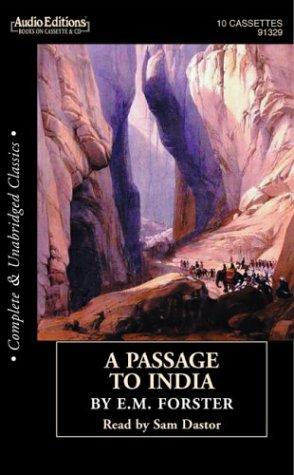
E. M. Forster · 1924
A friendship across the colonial divide collapses around an ambiguous incident in the Marabar Caves and a courtroom. The great English novel of empire's impossibility, ending on the word 'No, not yet.'
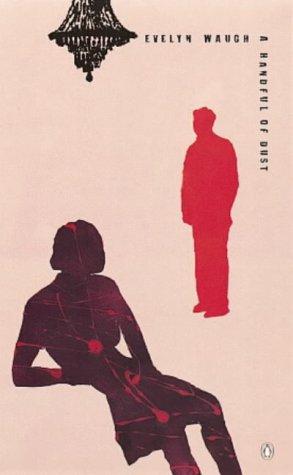
Evelyn Waugh · 1934
A faithful husband's genteel world collapses through his wife's affair and a son's accidental death, ending in a nightmarish Amazonian exile. Waugh's cruelest comedy curdles into something close to tragedy by its final pages.
Graham Greene · 1940
A whisky priest, corrupt and doubting, is hunted through anticlerical Mexico while wrestling with whether a man this compromised can still carry any grace at all. Greene finds sanctity in a man convinced of his own worthlessness: the definitive Catholic novel of grace in the gutter.
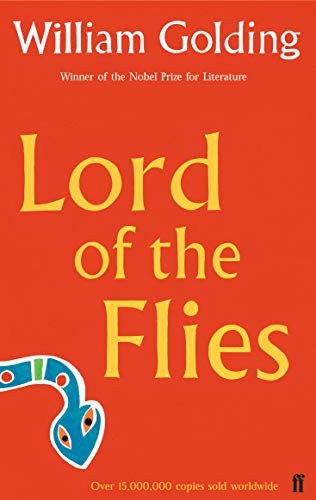
William Golding · 1954
English schoolboys marooned on a desert island build, then destroy, a miniature civilization within weeks. One of the century's bleakest and most widely taught parables about the thinness of the social contract.
Muriel Spark · 1961
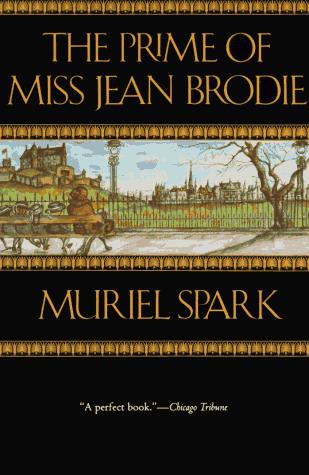
A charismatic Edinburgh schoolmistress shapes her chosen girls in her own image, flashing forward to the betrayal that ends her. Spark's diamond-hard little novel about influence, fascism, and the danger of being someone's favourite.
Authors of this movement
 1879–1970E. M. ForsterEnglandstart with A Passage to India
 1894–1963Aldous HuxleyEnglandstart with Brave New World
 1903–1950George OrwellEnglandstart with Nineteen Eighty-Four
 1903–1966Evelyn WaughEnglandstart with Brideshead Revisited
 1904–1991Graham GreeneEnglandstart with The Power and the Glory
 1911–1993William GoldingEnglandstart with Lord of the Flies
 1917–1993Anthony BurgessEnglandstart with A Clockwork Orange
 1918–2006Muriel SparkScotlandstart with The Prime of Miss Jean Brodie
 1919–1999Iris MurdochIreland / Englandstart with The Sea, the Sea
 1922–1995Kingsley AmisEnglandstart with The Old Devils
 1926–2005John FowlesEnglandstart with The French Lieutenant's Woman