
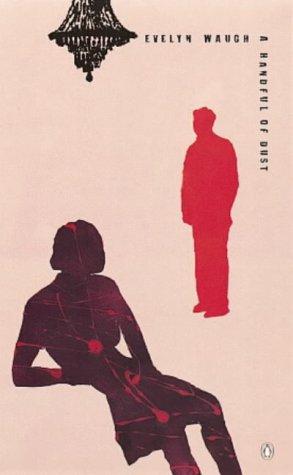
A Handful of Dust
Evelyn Waugh · 1903–1966 · England
Why it matters
A faithful husband's genteel world collapses through his wife's affair and a son's accidental death, ending in a nightmarish Amazonian exile. Waugh's cruelest comedy curdles into something close to tragedy by its final pages.
At a glance
Brisk comic prose that darkens without warning into a genuinely bleak final act.
Deep dive
A comedy of manners about a crumbling marriage that quietly changes genre halfway through, ending its cuckolded, unfailingly decent hero in the one place satire can't reach him.
Written for readers who have finished the book. No plot recap, and nothing here is safe to read first.
Themes & symbolism
Tony Last's devotion to Hetton Abbey — a shabby, unfashionable Gothic revival pile he maintains with earnest, old-fashioned sincerity while London society has moved on to sleeker, modern taste — establishes him from the opening pages as the novel's one character still operating by an outdated code of decency, loyalty, and domestic order that Waugh treats with genuine tenderness even while surrounding him with characters who find such earnestness faintly ridiculous. His wife Brenda's growing boredom with Hetton and with Tony's whole way of being is presented less as villainy than as an entire social class's exhausted abandonment of the values Tony still, guilelessly, believes in.
Brenda's affair with the vacant, parasitic John Beaver — a man with no discernible qualities beyond being available and fashionable — is one of Waugh's cruelest satirical inventions precisely because Beaver is given so little to recommend him; the affair isn't a grand romantic betrayal so much as Brenda trading a real, if unexciting, marriage for the mere social performance of excitement, and Waugh's flattest, most devastating sentence in the book comes when Brenda, told her son has died, briefly believes it's John Beaver and audibly registers relief before correcting herself — a moment where the novel's comic register curdles into something genuinely monstrous without changing its tone at all.
The title, drawn from The Waste Land's 'I will show you fear in a handful of dust,' signals Waugh's debt to Eliot's vision of a spiritually bankrupt modern civilization, and the novel earns the allusion by refusing Tony any of the consolations — religious, romantic, social — that might redeem his suffering; his journey into the Brazilian jungle in the novel's final section literalizes the Eliot epigraph, stripping away every vestige of the English social world whose rules he'd tried, uselessly, to keep honoring.
Waugh's Bleakest Comedy
Written in 1934 during the collapse of Waugh's own first marriage to Evelyn Gardner, who left him for a family friend in circumstances closely echoing Brenda's affair, the novel channels real personal wreckage into a satire notable for withholding the consoling Catholic frameworks Waugh's postwar fiction, including Brideshead Revisited, would later supply; there's no grace note here; Tony's decency is simply ground down by a social world with no further use for it, which is part of why critics have long read A Handful of Dust as Waugh's most purely bleak achievement even amid a career built largely on cruelty played for laughs.
The last seal: what actually happens, and why it lands the way it does.
The ending, explained
Devastated by Brenda's betrayal and unwilling to grant her the cheap divorce that would let her marry Beaver on favorable terms, Tony leaves England, joining an expedition into the Brazilian interior largely to escape a society with no further place for him. Fevered and stranded after the expedition collapses, he's taken in by Mr. Todd, an illiterate settler who owns an incomplete set of Dickens he cannot read himself; in exchange for shelter, Tony is made to read Dickens aloud to him, apparently indefinitely. When a rescue party arrives, Todd drugs Tony through their visit and tells them he died weeks earlier, leaving Tony trapped, the novel implies, for the rest of his life, reading the same novels to an audience of one in jungle no one will search again. The ending abandons realism for fable — a punishment wildly disproportionate to anything Tony did, which is Waugh's point: decency earns him no reprieve from a universe that was never, the novel insists, actually just.
Where to go next
 Evelyn Waugh · 1945Brideshead RevisitedLvl 5Medium pace
 Kingsley Amis · 1986The Old DevilsLvl 4Medium pace
 E. M. Forster · 1924A Passage to IndiaLvl 6Medium pace
 William Golding · 1954Lord of the FliesLvl 3Fast paced
 George Orwell · 1949Nineteen Eighty-FourLvl 4Fast paced
 Paul Scott · 1977Staying OnLvl 4Slow burn