

Graham Greene
England
Spare, tense, and morally shadowed: plain sentences that carry a gambler's suspense and a convert's guilt in equal measure.
Greene converted to Catholicism in 1926, partly to marry Vivien Dayrell-Browning, and spent the rest of his career mining the friction between sin and grace that conversion gave him. Depressive since adolescence, he worked for MI6 during the Second World War under the eventual Soviet double agent Kim Philby, an experience that fed his lifelong fascination with betrayal.
Commissioned by his English publisher to report on Mexico's anticlerical purges in 1938, he turned the trip into The Power and the Glory (1940). He kept traveling to the world's trouble spots (Vietnam, Haiti, the Congo, Cuba), turning each into what critics called 'Greeneland,' his moral geography of exile and doubt. He divided his fiction between serious 'novels' and lighter 'entertainments,' was shortlisted for the Nobel repeatedly without ever winning it, and died in Switzerland in 1991.
Lines of influence
Their books in the atlas
- 1938
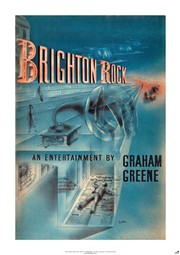 Brighton RockLvl 5crime & noir
 - 1940
 The Power and the GloryLvl 5philosophical novel
 - 1950
 The Third ManLvl 3crime & noir
 - 1951
 The End of the AffairLvl 5romance
 - 1955
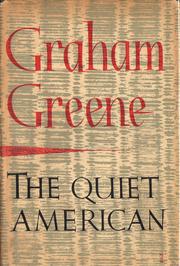 The Quiet AmericanLvl 5political novel
 - 1958
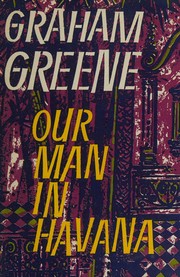 Our Man in HavanaLvl 4satire
Meanwhile, elsewhere
 1902–1991Isaac Bashevis SingerPoland / United StatesNorth America · Poland / United States
 1903–1993Silvina OcampoArgentinaLatin America · Argentina
 1904–2005Ba JinChinaEast Asia · China
 1905–2004Mulk Raj AnandIndiaSouth Asia · India
 1900–1989Sándor MáraiHungaryRussia & Eastern Europe · Hungary
 1906–2001R. K. NarayanIndiaSouth Asia · India
If you like Greene, try
 1857–1924Joseph ConradPoland / Englandshaped Greene · neighboring movements · same region & era
 1923–1996Endō ShūsakuJapanshaped by Greene · kindred genres: philosophical novel
 1919–1999Iris MurdochIreland / Englandshared movement: The British Midcentury Novel · kindred genres: philosophical novel · same region & era
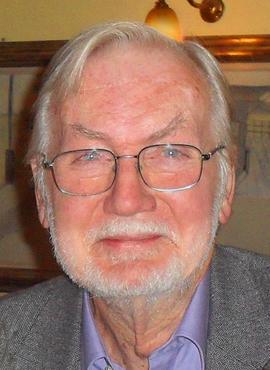 1930–2012Barry UnsworthEnglandboth shaped by Conrad · neighboring movements · same region & era
 1873–1939Ford Madox FordEnglandboth shaped by Conrad · neighboring movements · same region & era
 1903–1966Evelyn WaughEnglandshared movement: The British Midcentury Novel · same region & era