
Arabic & Middle Eastern Modern
Mahfouz's Cairo, Salih's Nile, Pamuk's Istanbul: cities as the novels of nations.
Naguib Mahfouz built the Arabic novel almost single-handedly, giving Cairo its Balzac and its Tolstoy in one lifetime: the Cairo Trilogy follows one family through three generations of a nation's awakening. Tayeb Salih's Season of Migration to the North answered Conrad from the other shore: the postcolonial encounter as mutual haunting.
Pamuk, heir to both Ottoman miniaturists and European modernists, made Istanbul's melancholy (hüzün) a world subject. Across the region, the novel remains a contested, vital form: the place where memory, faith, and modernity argue.
How to spot it on the page
- A single family tracked across generations as a stand-in for the nation's own awakening
- Old city quarters and their vanishing texture rendered street by street
- The colonial encounter restaged from the colonized side, haunting rather than adventure
- Faith and secular modernity arguing inside the same household or the same sentence
- A melancholy specific to place (Cairo's alleys, Istanbul's hüzün) treated as inheritable
- European literary forms bent to local cadence and historical memory
What it left behind
Mahfouz's Cairo and Salih's Nile proved the Arabic and Middle Eastern novel could carry a nation's whole self-argument, and the region never stopped testing that proof: Pamuk extended it to Istanbul's melancholy, and younger writers keep restaging the encounter between faith, empire, and modernity that Mahfouz first mapped. The contested, unsettled region he wrote is still, structurally, the one being written today.
Defining works
For a guided order with notes, follow the reading path →
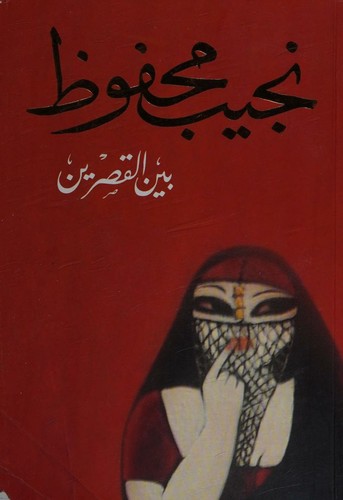
Naguib Mahfouz · 1956
The tyrannical al-Sayyid Ahmad rules his Cairo household by day and carouses by night, as the 1919 revolution stirs outside. The Cairo Trilogy opens here: the Arabic novel's foundational family saga.
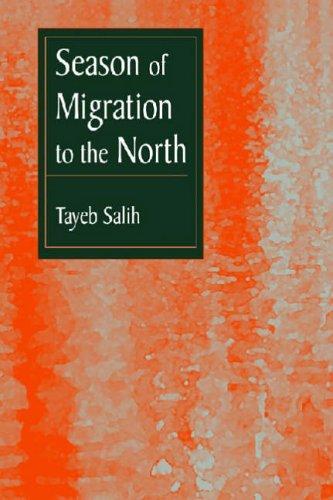
Tayeb Salih · 1966
A Sudanese scholar returns to his Nile village and meets Mustafa Sa'eed, whose London career was an erotic campaign of reverse colonization. Named the most important Arabic novel of the twentieth century: Conrad answered, shore for shore.
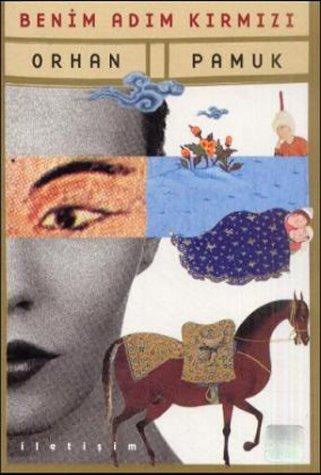
Orhan Pamuk · 1998
A murdered miniaturist narrates his own death as Ottoman artists debate whether style itself is sin: a mystery, a romance, and an essay on East, West, and seeing. The novel that carried Pamuk to the Nobel.
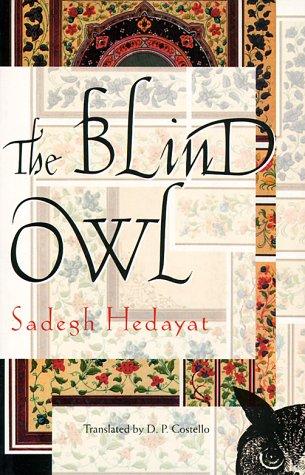
Sadegh Hedayat · 1937
An opium-soaked confession to a shadow shaped like an owl: obsession, murder, and recurrence in prose like fever. The masterpiece of modern Iranian fiction, long banned at home, translated everywhere.
Authors of this movement
 1901–1962Ahmet Hamdi TanpınarTurkeystart with The Time Regulation Institute
 1903–1951Sadegh HedayatIranstart with The Blind Owl
 1911–2006Naguib MahfouzEgyptstart with Palace Walk
 1922–1996Emile HabibiPalestine / Israelstart with The Secret Life of Saeed the Pessoptimist
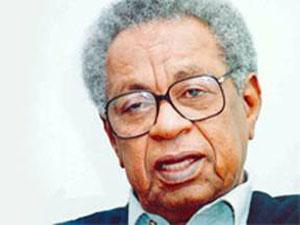 1929–2009Tayeb SalihSudanstart with Season of Migration to the North
 1931–2021Nawal El SaadawiEgyptstart with Woman at Point Zero1933–2004Abdul Rahman MunifSaudi Arabia / Jordanstart with Cities of Salt1936–1972Ghassan KanafaniPalestinestart with Men in the Sun
 b. 1940Mahmoud DowlatabadiIranstart with Missing Soluch
 1948–2024Elias KhouryLebanonstart with Gate of the Sun
 b. 1952Orhan PamukTurkeystart with My Name Is Red
 b. 1957Alaa Al AswanyEgyptstart with The Yacoubian Buildingb. 1978Jokha AlharthiOmanstart with Celestial Bodies