
Oulipo
The Workshop of Potential Literature turns constraint itself into the engine of invention.
Raymond Queneau and the mathematician François Le Lionnais founded the Ouvroir de littérature potentielle, the 'Workshop of Potential Literature,' in 1960 on a single wager: that arbitrary constraint generates invention rather than smothering it. A novel written without the letter e; the same slight anecdote retold ninety-nine ways in ninety-nine styles, as Queneau himself did in Exercises in Style; poems assembled combinatorially from interchangeable lines. The constraint is never the point; it is the machine built to force the writer somewhere they would not otherwise go.
Georges Perec built the group's masterpiece from a single fiendish constraint: Life A User's Manual maps every room of one Paris apartment building the moment its puzzle-obsessed resident dies, one piece still missing. Italo Calvino went further, making the reader the actual protagonist: If on a winter's night a traveler addresses 'you' directly and interrupts itself with the opening chapters of ten different novels. Queneau called the group 'rats who build the labyrinth from which they plan to escape,' systematizing typographic play Sterne had discovered two centuries earlier.
How to spot it on the page
- A single arbitrary constraint (a missing letter, a fixed structure) generating the whole book
- One anecdote or scene retold in dozens of different styles or forms
- The reader addressed directly and made complicit in the book's construction
- Mathematical or combinatorial structures (permutations, grids, algorithms) underlying the plot
- Playful, encyclopedic cataloguing of objects, rooms, or possibilities
- Formal difficulty worn as a game rather than solemn difficulty
What it left behind
Oulipo never disbanded, and that is its own kind of legacy: the group still meets, still admits new members, still generates constraint-built texts decades after its founders died. Perec's apartment-building novel and Calvino's reader-as-protagonist both proved constraint could produce feeling as easily as cleverness, and their influence runs through every contemporary novel built on a hidden formal rule, from lipograms to structured, puzzle-box fiction.
Defining works
For a guided order with notes, follow the reading path →
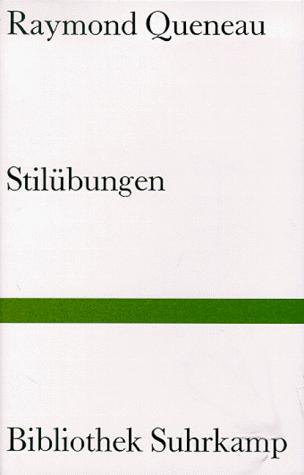
Raymond Queneau · 1947
The same trivial bus encounter is retold ninety-nine times in ninety-nine different styles, from sonnet to telegram to legalese. A formal experiment that became Oulipo's founding demonstration of constraint as creative engine.
Georges Perec · 1978
Every apartment of a single Paris building is reconstructed in one frozen moment, following a chess-knight's path from room to room. An encyclopedic puzzle-novel of astonishing structural ambition, built around a jigsaw-maker's own devastating story.
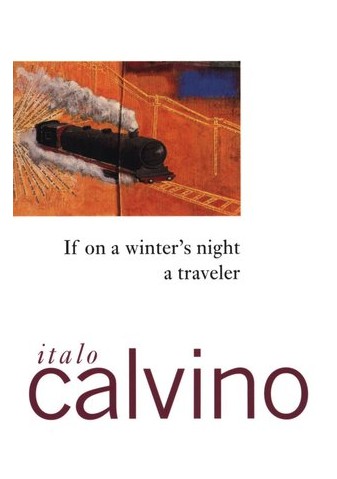
Italo Calvino · 1979
You, the Reader, keep starting novels that break off: ten openings, one love story about reading itself. Postmodern play at its most generous; the rare metafiction that ends in a wedding.


