

George Orwell
England
Plain, clean, unadorned English wielded like a scalpel: every sentence built for maximum clarity, distrustful of any word that could obscure the truth.
Orwell was born Eric Blair in Bengal and educated on scholarship at Eton, then joined the Indian Imperial Police in Burma at nineteen, five years of enforcing colonial rule that left him, by his own account, riddled with guilt, and supplied Burmese Days and the essay 'Shooting an Elephant.' He resigned in 1927, deliberately lived in poverty among tramps and dishwashers in Paris and London, and adopted his pen name for Down and Out in Paris and London (1933).
In 1936 he went to fight fascism in Spain with a Trotskyist militia, was shot through the throat by a sniper, and nearly died: an experience that hardened his lifelong hatred of totalitarian propaganda, recorded in Homage to Catalonia. Animal Farm (1945) satirized the Russian Revolution's betrayal; Nineteen Eighty-Four, written in a rush while he was dying, followed in 1949. He succumbed to tuberculosis in a London hospital in January 1950, at forty-six.
Lines of influence
No ancestors recorded: a headwater.
Their books in the atlas
- 1945
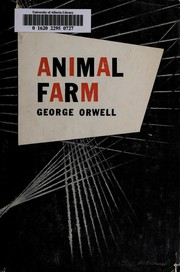 Animal FarmLvl 2satire
 - 1949
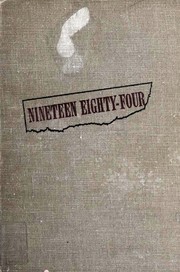 Nineteen Eighty-FourLvl 4dystopian
Meanwhile, elsewhere
 1899–1977Vladimir NabokovRussia / USARussia & Eastern Europe · Russia / USA
 1890–1960Boris PasternakRussiaRussia & Eastern Europe · Russia
 1899–1951Andrei PlatonovRussiaRussia & Eastern Europe · Russia
 1870–1953Ivan BuninRussiaRussia & Eastern Europe · Russia
 1892–1975Ivo AndrićYugoslavia / BosniaRussia & Eastern Europe · Yugoslavia / Bosnia
 1900–1989Sándor MáraiHungaryRussia & Eastern Europe · Hungary
If you like Orwell, try
 b. 1967Adam JohnsonUSAshaped by Orwell · kindred genres: dystopian, political novel
 1917–1993Anthony BurgessEnglandshared movement: The British Midcentury Novel · kindred genres: dystopian, satire · same region & era
 1894–1963Aldous HuxleyEnglandshared movement: The British Midcentury Novel · kindred genres: satire, dystopian · same region & era
 1903–1966Evelyn WaughEnglandshared movement: The British Midcentury Novel · kindred genres: satire · same region & era
 1918–2006Muriel SparkScotlandshared movement: The British Midcentury Novel · kindred genres: satire · same region & era
 1935–1979J. G. FarrellEnglandkindred genres: satire · neighboring movements · same region & era