
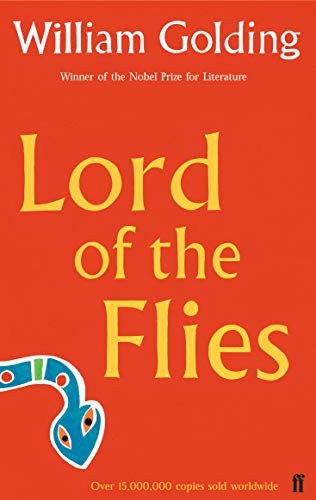
Lord of the Flies
William Golding · 1911–1993 · England
Why it matters
English schoolboys marooned on a desert island build, then destroy, a miniature civilization within weeks. One of the century's bleakest and most widely taught parables about the thinness of the social contract.
At a glance
Clear narrative prose with mounting symbolic weight, accessible to teen readers.
Deep dive
Why the conch and Piggy's glasses lose their authority gradually rather than all at once, and what it says about this stranded troop of boys that the adult world watching over them is fighting a war of its own.
Written for readers who have finished the book. No plot recap, and nothing here is safe to read first.
Themes & symbolism
The conch and Piggy's glasses are the novel's clearest instruments of civilization, and Golding is exact about how they fail: the conch loses its authority gradually, through ignored turns and shouted-down votes, before Roger ever needs to smash it outright, and the glasses go from communal fire-making tool to Jack's stolen war trophy the moment usefulness starts to matter more than fairness. Piggy's own death — crushed by the boulder that also destroys the conch — collapses reason and rule of law in a single blow, and Golding stages it as an afterthought in the middle of a raid rather than a climax, which is the point: civilization on the island was never defeated in open battle, it was simply outgrown and discarded.
Simon is the only boy who works out what the beast actually is, and the novel kills him almost in the same breath. His fevered vision of the pig's head on a stick — 'Lord of the Flies,' a literal translation of Beelzebub, addressing him directly — states the theme plainly enough that it barely counts as symbolism anymore: the beast isn't a creature to be hunted and speared, it's what's already loose in the boys themselves. Golding then has the tribe kill Simon in a frenzied ritual dance the instant he stumbles out of the dark to tell them exactly that, mistaking the messenger for the monster in the most literal possible enactment of a society that murders its own prophets.
A Rescue Fought By the Same War
Golding surrounds the island with an unstated but insistent context: the boys were evacuated because a global war was already underway, and the naval officer who eventually comes ashore is a combatant in that same conflict, cruiser and all. His clipped disapproval of the boys' 'not-quite' English standard of behavior — delivered while Ralph sobs over Piggy and Simon — is the novel's driest joke: the adult world arriving to rescue children from savagery is itself engaged in organized savagery on a far larger scale, just one with uniforms, chains of command, and no one calling it that.
The last seal: what actually happens, and why it lands the way it does.
The ending, explained
Ralph, marked for the same death Simon and Piggy already got, is being hunted across the island when Jack's tribe sets the undergrowth ablaze to flush him out — the same kind of fire that was meant to summon rescue earlier in the book, now used to end a life instead of saving one. The blaze is spotted by a passing warship, and a naval officer comes ashore to find not the organized band he expects but a pack of filthy, weeping children and two dead boys. His scolding lands as pure irony rather than reassurance: rescue arrives, but nothing that caused the killing has been addressed, only interrupted, and the man doing the rescuing is stepping out of one war into a schoolyard version of the same thing.
Where to go next
 William Golding · 1955The InheritorsLvl 7Slow burn
 William Golding · 1980Rites of PassageLvl 6Medium pace
 Evelyn Waugh · 1945Brideshead RevisitedLvl 5Medium pace
 John Fowles · 1969The French Lieutenant's WomanLvl 6Medium pace
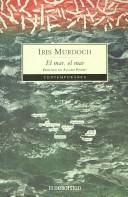 Iris Murdoch · 1978The Sea, the SeaLvl 6Slow burn
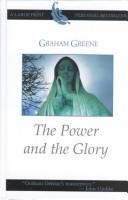 Graham Greene · 1940The Power and the GloryLvl 5Medium pace