
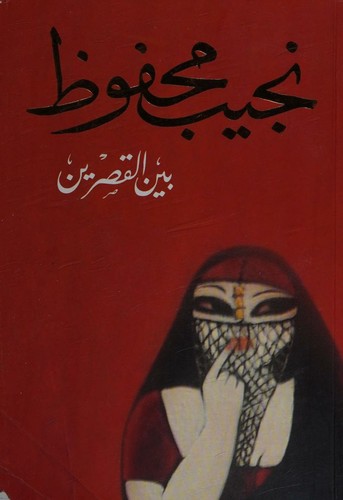
Palace Walk
Naguib Mahfouz · 1911–2006 · Egypt
Originally Bayn al-Qasrayn (Arabic) · translated by William Maynard Hutchins and Olive E. Kenny
Why it matters
The tyrannical al-Sayyid Ahmad rules his Cairo household by day and carouses by night, as the 1919 revolution stirs outside. The Cairo Trilogy opens here: the Arabic novel's foundational family saga.
At a glance
Leisurely realist prose and a large household cast, but linear and clearly narrated.
Deep dive
How one household's iron routines quietly rehearse the politics erupting in the streets outside its walls, and what breaks first.
Written for readers who have finished the book. No plot recap, and nothing here is safe to read first.
Themes & symbolism
Al-Sayyid Ahmad rules his household with an absolutism no one dares question — his wife Amina waits up nightly to remove his shoes, his children flinch at his footsteps, his word is treated as close to divine law — while every night he sheds that persona entirely among friends, wine, and mistresses, laughing in a voice his own family has never heard. Mahfouz doesn't present the hypocrisy as an isolated character flaw; it's structural, a portrait of authority that survives only because it demands total submission from those with no way to verify it, exactly the bargain colonial rule was asking of Egypt at the same moment outside the house's walls.
Amina's confinement is the novel's starkest image of that bargain: twenty-five years without setting foot beyond the front door except onto the roof, until she seizes one small act of will — a visit to the al-Hussein shrine while her husband is away — and is struck by a car and, on Ahmad's return, banished from the house in punishment disproportionate to any actual offense. The severity reveals how fragile his authority really is: it survives only on absolute, untested obedience, and cracks the instant anyone tests it. Fahmy's growing devotion to the 1919 revolution runs on the same fault line — his father, who privately breaks every rule he enforces, forbids his son's political activity purely out of fear of consequence, never principle.
Amina's Punishment: The House as Prison
Amina's brief exile, over a shrine visit taken in her husband's absence and with the children's encouragement, is framed by the household almost as scandal rather than the minor act it was — proof that her confinement was never really about propriety but about control for its own sake. Her quiet, wounded compliance afterward, returning to the household routine as if nothing had happened, is the novel's bleakest comment on how completely domestic tyranny can be internalized by the very people it constrains.
Private Tyranny, Public Occupation
Mahfouz stages the household and the nation as mirrors of each other without ever stating the analogy outright: Ahmad's rule by fear and secrecy, upheld by the same family who could topple it with one honest word, sits directly alongside a British occupation upheld by comparable submission. The novel's political sympathies clearly favor the revolution stirring outside, which makes al-Sayyid Ahmad's private household — patriarchal, arbitrary, unaccountable — read as the small-scale version of everything Egypt is fighting to be rid of.
The last seal: what actually happens, and why it lands the way it does.
The ending, explained
Fahmy, forbidden by his father from any involvement in the 1919 revolution, joins a nationalist demonstration in secret anyway and is shot dead by British gunfire in the street. The news reaches al-Sayyid Ahmad, whose entire authority over his household rested on the belief that his word could keep his children safe, and the death breaks him in a way none of his own transgressions ever could. Mahfouz closes the first volume of the Cairo Trilogy on this unresolved grief rather than any narrative bow — a household's private tyranny proven powerless against the actual violence of history, and a father left to reckon with how little his control over his family's obedience ever really protected them.
Where to go next
 Naguib Mahfouz · 1947Midaq AlleyLvl 3Medium pace
 Naguib Mahfouz · 1957Palace of DesireLvl 5Medium paceNaguib Mahfouz · 1957Sugar StreetLvl 5Medium pace
 Naguib Mahfouz · 1959Children of the AlleyLvl 7Slow burnNaguib Mahfouz · 1961The Thief and the DogsLvl 6Fast paced
 Alaa Al Aswany · 2002The Yacoubian BuildingLvl 4Fast paced