
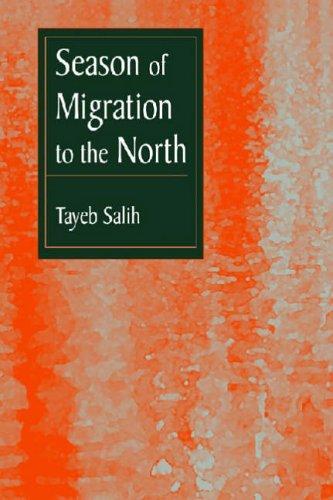
Season of Migration to the North
Tayeb Salih · 1929–2009 · Sudan
Originally Mawsim al-Hijra ila al-Shamal (Arabic) · translated by Denys Johnson-Davies
Why it matters
A Sudanese scholar returns to his Nile village and meets Mustafa Sa'eed, whose London career was an erotic campaign of reverse colonization. Named the most important Arabic novel of the twentieth century: Conrad answered, shore for shore.
At a glance
Nested frame narratives and an unreliable double-narrator structure resist easy resolution.
Deep dive
Sa'eed's London campaign only makes sense as an answer to Heart of Darkness — and the narrator's real crisis is realizing he might be living inside someone else's colonial fantasy.
Written for readers who have finished the book. No plot recap, and nothing here is safe to read first.
Themes & symbolism
Sa'eed's seductions aren't a love plot, they're an act of retaliation staged in the register the English women themselves supplied: he performs the exoticized, dangerous Oriental lover their own colonial imagination had already scripted for him, then uses that performance as a weapon. It's conquest reversed and made intimate — instead of land, bodies; instead of a flag planted, women destroyed, several to suicide, ending in Jean Morris's death in an act neither pure murder nor pure consent. Salih is explicit that this isn't liberation, it's colonialism's violence internalized and re-aimed, which is why Sa'eed's "victory" leaves him as hollowed out as anyone he touched — he returns to Sudan not triumphant but anonymous, trying to disappear into an ordinary village marriage.
The narrator functions as Sa'eed's double more than his opposite: both men shuttled between Sudan and the colonizing North, both formed by an education designed elsewhere, and the narrator's fascination with Sa'eed's story is really an interrogation of his own uncertain footing between the two worlds. Hosna's fate closes the novel's other argument — that the village itself, not only the distant colonizer, enforces a violent patriarchal order, and her murder-suicide against a forced remarriage indicts Sudanese custom as sharply as Salih indicts empire. Read against Heart of Darkness, the novel doesn't just answer Conrad's darkness-is-Africa frame, it insists the horror runs through both directions of the river.
Conrad, Answered
Salih read Conrad at university and wrote this novel in explicit conversation with him — the unnamed narrator's journey toward Sa'eed's secret mirrors Marlow's journey toward Kurtz, but Salih relocates "the horror" out of the African interior and into London drawing rooms, then refuses to let either Sudan or England claim moral high ground. It's less a rebuttal than a redirection: the same imperial logic that lets Europe imagine Africa as darkness is the logic Sa'eed weaponizes right back, and neither culture emerges from the novel innocent. The novel itself has had a contentious life at home, banned for years in Sudan over its frank sexual content before being restored to its place as the most celebrated work of modern Arabic fiction — a reception history that mirrors the book's own argument that scandal and canonization were never really opposites.
The last seal: what actually happens, and why it lands the way it does.
The ending, explained
Overwhelmed by Sa'eed's legacy and his own unresolved identity, the narrator swims out into the Nile at night, toward the same stretch of river where Sa'eed apparently drowned — the gesture reads as a deliberate echo, maybe an attempt to complete or repeat Sa'eed's fate. At the furthest point, exhausted, he chooses to cry out for help rather than let the current take him, and the novel ends on that choice rather than on rescue itself. Salih leaves Sa'eed's own drowning permanently ambiguous — accident, suicide, disappearance — but resolves the narrator's parallel moment clearly: a decision to live, made for people he has left to return to, not for any grand reconciliation of Sudan and the West.
Where to go next
 Naguib Mahfouz · 1956Palace WalkLvl 4Medium pace
 Joseph Conrad · 1899Heart of DarknessLvl 7Slow burn
 Chinua Achebe · 1958Things Fall ApartLvl 4Medium pace
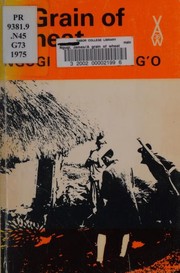 Ngũgĩ wa Thiong'o · 1967A Grain of WheatLvl 6Slow burn
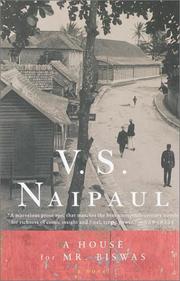 V. S. Naipaul · 1961A House for Mr BiswasLvl 5Medium pace
 Ford Madox Ford · 1915The Good SoldierLvl 7Slow burn