
Jokha Alharthi
Oman
Elliptical and chorus-voiced, the same events refracted through shifting narrators and broken chronology: history assembled the way memory actually works, in fragments.
Alharthi grew up in Oman and earned a PhD in classical Arabic poetry at the University of Edinburgh, an academic grounding that shows in Celestial Bodies' dense, allusive prose. She has taught Arabic literature at Sultan Qaboos University while continuing to publish fiction and children's books in Arabic.
Celestial Bodies (2010) follows three sisters in the village of al-Awafi as Oman itself transforms within a single generation, from a society still entangled with slavery into an oil-wealthy modern state, its nonchronological structure circling between more than a dozen narrators rather than following any one of them straight through.
In 2019 it won the International Booker Prize, the first win for a Gulf writer and the first for any novel originally written in Arabic: a breakthrough Alharthi has said she hopes opens English-language readers to more of the region's fiction.
Their books in the atlas
- 2010
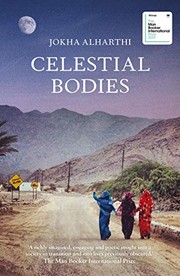 Celestial BodiesLvl 7family saga
Meanwhile, elsewhere
 b. 1940Annie ErnauxFranceWestern Europe · France
 b. 1975Zadie SmithEnglandWestern Europe · England
 b. 1948Ian McEwanEnglandWestern Europe · England
 b. 1946Julian BarnesEnglandWestern Europe · England
 b. 1967Rachel CuskUnited Kingdom / CanadaWestern Europe · United Kingdom / Canada
 b. 1953Herta MüllerGermany / RomaniaWestern Europe · Germany / Romania
If you like Alharthi, try
 b. 1957Alaa Al AswanyEgyptshared movement: Arabic & Middle Eastern Modern · kindred genres: family saga · both write in Arabic
 1911–2006Naguib MahfouzEgyptshared movement: Arabic & Middle Eastern Modern · kindred genres: family saga, psychological novel · both write in Arabic
 1931–2021Nawal El SaadawiEgyptshared movement: Arabic & Middle Eastern Modern · kindred genres: psychological novel · both write in Arabic
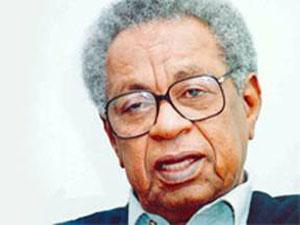 1929–2009Tayeb SalihSudanshared movement: Arabic & Middle Eastern Modern · kindred genres: psychological novel · both write in Arabicb. 1976Mieko KawakamiJapankindred genres: family saga, psychological novel
 b. 1954Wang AnyiChinakindred genres: family saga, psychological novel