

Italo Calvino
Italy
Playful, crystalline, and precise: fantastical premises worked out with the calm logic of a mathematician delighting in his own proof.
Calvino was born in Cuba to Italian botanist parents and grew up in San Remo; as a teenager during the war he fought with Italian partisans in the mountains above the Ligurian coast. He joined the Communist Party and the publisher Einaudi in the same postwar years, and his first novel, The Path to the Nest of Spiders (1947), was straight wartime neorealism, a style he quit almost as soon as he'd mastered it.
He left the Party after the Soviet crushing of the 1956 Hungarian uprising and turned toward fable, allegory, and formal play: a trilogy of fantastical novellas, then Invisible Cities (1972) and If on a winter's night a traveler (1979). In Paris he joined the experimental writers' group Oulipo alongside Raymond Queneau and Georges Perec. He died in Siena in 1985 after a stroke, days before he was due to deliver Harvard's Norton Lectures, published posthumously as Six Memos for the Next Millennium.
Lines of influence
Their books in the atlas
- 1957
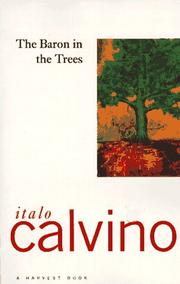 The Baron in the TreesLvl 4speculative fiction
 - 1972
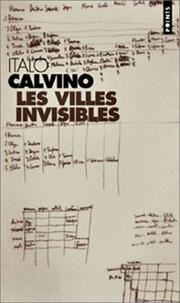 Invisible CitiesLvl 5postmodern
 - 1979
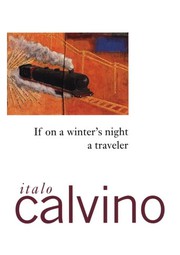 If on a winter's night a travelerLvl 6postmodern
Meanwhile, elsewhere
 1918–2008Aleksandr SolzhenitsynRussiaRussia & Eastern Europe · Russia
 1914–1997Bohumil HrabalCzechiaRussia & Eastern Europe · Czechia
 1921–2006Stanisław LemPolandRussia & Eastern Europe · Poland
 1900–1989Sándor MáraiHungaryRussia & Eastern Europe · Hungary
 1917–2007Magda SzabóHungaryRussia & Eastern Europe · Hungary
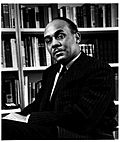 1913–1994Ralph EllisonUSANorth America · USA
If you like Calvino, try
 b. 1952Orhan PamukTurkeyshaped by Calvino · shared movement: Contemporary World Fiction · both shaped by Borges
 1944–2001W. G. SebaldGermany / Englandshared movement: Contemporary World Fiction · both shaped by Borges · kindred genres: postmodern
 1899–1986Jorge Luis BorgesArgentinashaped Calvino · both shaped Pamuk · kindred genres: postmodern, speculative fiction
 1953–2003Roberto BolañoChile / Mexico / Spainshared movement: Contemporary World Fiction · both shaped by Borges · kindred genres: postmodern, bildungsroman
 b. 1973Hernán DiazArgentina / United Statesshared movement: Contemporary World Fiction · both shaped by Borges · kindred genres: postmodern
 1932–2016Umberto EcoItalyboth shaped by Borges · kindred genres: postmodern · both write in Italian