
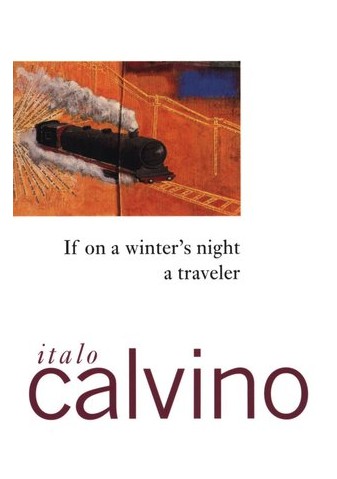
If on a winter's night a traveler
Italo Calvino · 1923–1985 · Italy
Originally Se una notte d'inverno un viaggiatore (Italian) · translated by William Weaver
Why it matters
You, the Reader, keep starting novels that break off: ten openings, one love story about reading itself. Postmodern play at its most generous; the rare metafiction that ends in a wedding.
At a glance
Second-person frame narrative interleaved with ten distinct pastiche novel openings.
Deep dive
Ten different novels keep starting and none of them finish, and the person actually reading all of them is you, cast by Calvino as the book's own leading character.
Written for readers who have finished the book. No plot recap, and nothing here is safe to read first.
Themes & symbolism
Calvino addresses the reader directly as "you" from the first sentence and never stops, casting an actual reader, buying and opening this actual book, as the novel's own protagonist rather than a passive receiver of someone else's story. The structure runs on a deliberately maddening pattern: each odd-numbered chapter follows "you" through the real-world plot of trying to read a novel called If on a winter's night a traveler, while each even-numbered chapter is the opening pages of a different pastiche novel, ten of them in total, each interrupted just as it becomes engaging by a printing error, a missing signature, a translator's fraud, or some other structural accident that sends "you" back out to hunt down the actual complete book.
The romance plot, such as it is, runs entirely through Ludmilla, the Other Reader, whom "you" meets while chasing down the same string of incomplete novels, and Calvino makes the courtship almost entirely a matter of reading habits and preferences rather than conventional incident: what kind of books Ludmilla likes, how she reads, what she wants from a novel, stands in for everything a more traditional love plot would spend on physical description or shared history. It's a genuinely romantic structure despite, or because of, its total abstraction, since the deepest intimacy Calvino's novel can imagine is two people wanting the same unfinished book equally badly.
Behind the chain of interrupted books sits Ermes Marana, a rogue translator and literary forger deliberately scrambling manuscripts, inventing fake authors, and smuggling counterfeit texts into print for reasons that are as much personal, jealousy over Ludmilla, as ideological, and Marana's sabotage gives Calvino license to write ten wildly different pastiche openings, a hardboiled thriller, a diary novel, a political conspiracy, an erotic confession, each a small demonstration of a different genre's conventions performed with total commitment before Calvino yanks it away. The pastiches aren't parody exactly; they're closer to genuine admiration staged as a structural joke, Calvino demonstrating how convincingly he can inhabit ten unrelated literary voices purely to prove that none of them, however good, is the actual novel "you" set out to finish.
Oulipo's Combinatorial Machine
Calvino wrote the novel as a member of Oulipo, the Paris-based group devoted to literature built from formal constraints, and the book's structure is itself an Oulipian machine: ten genuinely different genre openings generated to a strict alternating pattern with the frame narrative, capped by a final chapter whose title is built entirely from the first lines of all ten previous openings strung together into one continuous, grammatically coherent sentence. That last formal trick, turning a decade's worth of abandoned beginnings into a single finished sentence, is Calvino's own answer to the novel's whole problem of interrupted narrative: the fragments were never separate failures, they were always one longer text waiting for a reader patient enough to assemble it.
The last seal: what actually happens, and why it lands the way it does.
The ending, explained
The frame narrative resolves with "you" and Ludmilla married, reading together in bed, which lets Calvino close the novel on its own title spoken back as dialogue: asked what he's doing, "you" answers that he's just about to finish If on a winter's night a traveler by Italo Calvino, the exact book the reader is holding, collapsing the frame and the object into the same sentence. The final chapter's title, built from the first lines of all ten interrupted pastiches read consecutively, forms one continuous, almost coherent narrative of its own, Calvino's proof that a novel built entirely from abandoned beginnings can still add up to a genuine ending, just not the kind any of its individual fragments were promising on their own.
Where to go next
 Italo Calvino · 1957The Baron in the TreesLvl 4Medium pace
 Italo Calvino · 1972Invisible CitiesLvl 5Slow burn
 Orhan Pamuk · 1998My Name Is RedLvl 7Medium pace
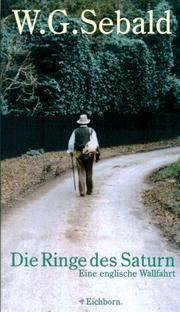 W. G. Sebald · 1995The Rings of SaturnLvl 7Slow burn
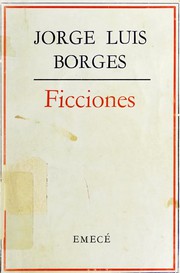 Jorge Luis Borges · 1944FiccionesLvl 7Slow burn
 Roberto Bolaño · 1998The Savage DetectivesLvl 7Medium pace