
Modern Chinese Fiction
From Lu Xun's diagnosis of a nation to Mo Yan's hallucinatory histories.
Modern Chinese literature begins with a scream: Lu Xun's 'A Madman's Diary' (1918), which read four thousand years of tradition as cannibalism and made fiction the scalpel of national self-examination. Eileen Chang, writing in besieged 1940s Shanghai, found the era's tragedy in love affairs and wallpaper: style itself as survival.
After the Cultural Revolution's silence, fiction returned with ferocious energy: Mo Yan's carnal village epics, Yu Hua's calm chronicles of ordinary people ground through history. The tradition's constant is the individual life used to weigh the century's convulsions.
How to spot it on the page
- Fiction wielded explicitly as a scalpel on national character, not just storytelling
- Everyday domestic detail (a dress, a meal, a strip of wallpaper) carrying historical catastrophe's full weight
- Village and peasant life rendered with equal parts brutality and folk exuberance
- One ordinary life used to measure decades of political upheaval
- Sudden violence narrated in the same calm register as daily chores
- Irony aimed at imperial tradition and revolutionary certainty in equal measure
What it left behind
Lu Xun's diagnostic scream and Eileen Chang's wartime elegance both went silent under Mao, decades in which fiction survived mostly underground or abroad. What returned after the Cultural Revolution inherited the original method rather than the silence: Mo Yan's hallucinatory village epics and Yu Hua's plain-spoken endurance narratives still use one life to take the century's temperature, the scalpel recalibrated for new wounds.
Defining works
For a guided order with notes, follow the reading path →
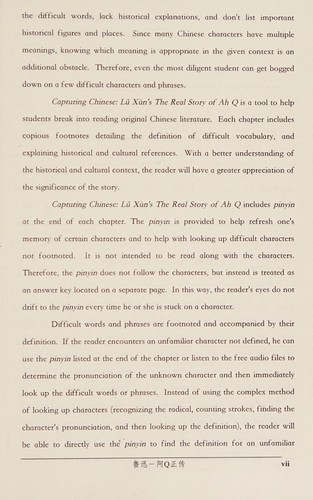
Lu Xun · 1921
Ah Q turns every humiliation into a delusional 'spiritual victory,' oblivious as a revolution he doesn't understand closes in around him: China's unflattering mirror, alongside the Gogol-inspired 'Diary of a Madman' that started modern Chinese literature with a scream.
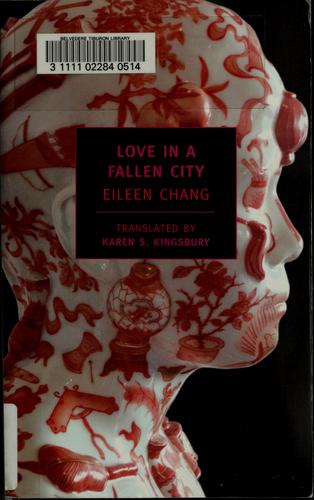
Eileen Chang · 1943
A divorcée and a playboy circle each other in a calculated courtship, each testing how much the other will risk, as Hong Kong falls to the Japanese around them. Chang's worldly, desolate stories made style itself a form of survival.
Mo Yan · 1986
Bandits, distillers, and the anti-Japanese resistance in rural Shandong, narrated by a grandson mythologizing his outlaw grandparents. García Márquez and Faulkner transplanted into Chinese soil: the post-Mao literary explosion's banner novel.
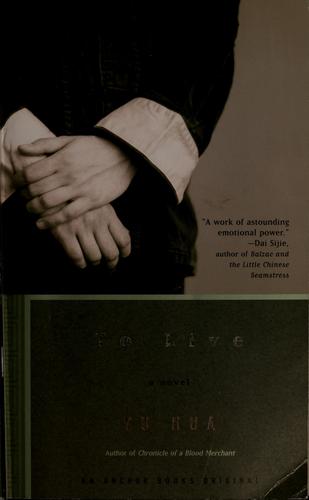
Yu Hua · 1993
Fugui gambles away his family's fortune, then survives civil war, famine, and the Cultural Revolution: losing everyone, keeping life. Devastating calm; banned at home, and China's most beloved novel abroad.
Authors of this movement
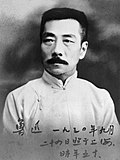 1881–1936Lu XunChinastart with The Real Story of Ah-Q and Other Tales
 1899–1966Lao SheChinastart with Rickshaw Boy
 1902–1988Shen CongwenChinastart with Border Town
 1904–2005Ba JinChinastart with Family
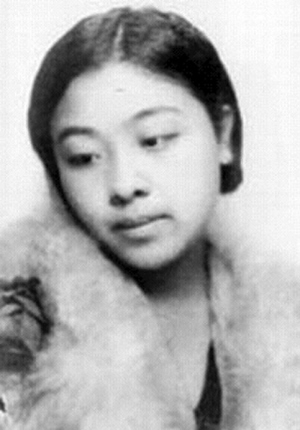 1904–1986Ding LingChinastart with Miss Sophie's Diary
 1910–1998Qian ZhongshuChinastart with Fortress Besieged
 1911–1942Xiao HongChinastart with The Field of Life and Death
 1920–1995Eileen ChangChina / USAstart with Love in a Fallen City
 b. 1940Gao XingjianChina / Francestart with Soul Mountain
 b. 1954Wang AnyiChinastart with The Song of Everlasting Sorrow
 b. 1955Mo YanChinastart with Red Sorghum
 b. 1958Yan LiankeChinastart with Serve the People!
 b. 1960Yu HuaChinastart with To Live
 b. 1963Su TongChinastart with Raise the Red Lantern