

Gao Xingjian
China / France
Fragmented and searching, sliding between first- and second-person address as if the narrator were arguing with himself across a journey with no fixed destination.
Gao trained in French at the Beijing Foreign Languages Institute and translated Ionesco and Beckett into Chinese before the Cultural Revolution sent him to years of rural labor; fearing a search, he burned a suitcase of his own manuscripts rather than risk being caught with them. A false cancer diagnosis in the late 1970s, followed by a solo journey along the Yangtze to its source, became the seed of Soul Mountain, blending travelogue, memory, and folklore in alternating pronouns.
His experimental, absurdist plays repeatedly drew official censure through the 1980s. He relocated to Paris in 1987 and remained after Beijing's 1989 crackdown on Tiananmen Square, which his own writing about the massacre made a return impossible; he took French citizenship soon after.
In 2000 he became the first Chinese-language writer awarded the Nobel Prize in Literature, an honor barely acknowledged by Chinese state media given his exile status. He is also an accomplished ink painter, exhibited internationally alongside his writing.
Their books in the atlas
- 1990
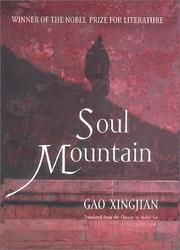 Soul MountainLvl 8postmodern
 - 1999
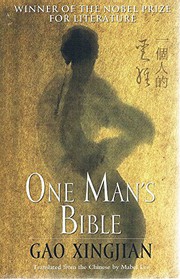 One Man's BibleLvl 7autobiographical fiction
Meanwhile, elsewhere


If you like Xingjian, try
 1911–1942Xiao HongChinashared movement: Modern Chinese Fiction · kindred genres: autobiographical fiction · both write in Chinese
 b. 1955Mo YanChinashared movement: Modern Chinese Fiction · both write in Chinese · same region & era
 b. 1954Wang AnyiChinashared movement: Modern Chinese Fiction · both write in Chinese · same region & era
 b. 1958Yan LiankeChinashared movement: Modern Chinese Fiction · both write in Chinese · same region & era
 1330–1400Luo GuanzhongChinaboth write in Chinese · neighboring movements
 1296–1372Shi Nai'anChinaboth write in Chinese · neighboring movements