
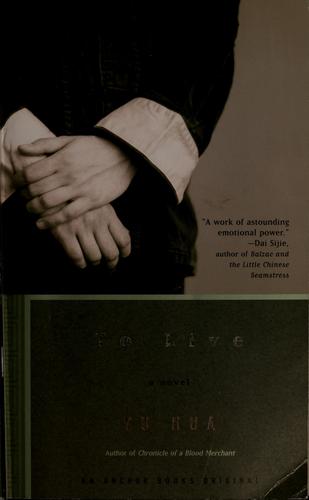
To Live
Yu Hua · b. 1960 · China
Originally Huozhe (Chinese) · translated by Michael Berry
Why it matters
Fugui gambles away his family's fortune, then survives civil war, famine, and the Cultural Revolution: losing everyone, keeping life. Devastating calm; banned at home, and China's most beloved novel abroad.
At a glance
Plain, folkloric storytelling voice despite its accumulating tragedy.
Deep dive
How successive catastrophe becomes the source of this novel's strange calm, why Fugui's own gambling ruin ends up saving his life, and what the folk-song frame is doing to keep this from turning into melodrama.
Written for readers who have finished the book. No plot recap, and nothing here is safe to read first.
Themes & symbolism
Yu Hua's method is to withhold exactly the register readers expect from this material — no polemic against Land Reform, the Great Leap famine, or the Cultural Revolution, no authorial anger, just Fugui's own flat, almost folkloric recounting of one family member after another dying, each death caused with quiet precision by a specific historical policy rather than by fate in the abstract. Youqing bleeds to death because a doctor prioritizes a Party official's hemorrhaging wife; Kugen dies of an engorged stomach because the famine that preceded his glut of beans had trained everyone's body to fail at abundance as readily as at scarcity. The plainness of the telling is the argument: melodrama would let the reader feel something and move on, while Yu Hua's flatness makes the losses accumulate without any release valve.
The novel's irony machine runs on reversal of fortune treated with total indifference to justice: Fugui's gambling ruin, which destroys his family, is also what saves his life during Land Reform, since the land and status he lost to Long Er are exactly what gets Long Er executed as a landlord in his place. Fugui survives not because he's virtuous but because he's already been reduced to nothing once before the state arrived to reduce everyone; the novel refuses to let poverty or ruin mean anything as straightforwardly as punishment or reward. What's left, after every family member dies in some new officially sanctioned or officially indifferent way, is Fugui plowing a field beside an old ox he's named after himself — endurance offered not as triumph or lesson but as the only fact left standing.
The Frame Narrator and the Folk-Song Register
Yu Hua frames the whole novel as a story told aloud to a folk-song collector traveling the countryside, which matters more than it first appears: Fugui isn't confessing to a psychologist or lecturing a reader, he's performing his life in the oral register of someone used to entertaining, which is exactly why the telling carries no self-pity even at its most devastating. The folk-song frame also explains the novel's title in the plainest possible way — "to live" is presented as a value a peasant storyteller would actually hold, not a literary thesis imposed from outside. That distinction is part of why the book was banned for a period on the mainland even as it became China's most beloved novel abroad: its refusal to editorialize about the policies that kill Fugui's family reads, depending on the reader, as devastating implicit critique or as apolitical folk wisdom, and Yu Hua never resolves which.
The last seal: what actually happens, and why it lands the way it does.
The ending, explained
By the novel's end, Fugui has outlived his father, mother, wife Jiazhen, son Youqing, daughter Fengxia, son-in-law Erxi, and grandson Kugen — every person he loves, across four decades of the Chinese Civil War, Land Reform, the Great Leap famine, and the Cultural Revolution. He responds not by breaking but by buying a worn-out ox headed for slaughter, naming it Fugui after himself, and going on farming with it as his last companion. The frame narrator, who has been listening to this entire account as an old man's afternoon story, gets no tidy moral from Fugui — just the old man and his aging ox moving off across the field together. Yu Hua's point is exactly that starkness: survival needs no redemptive meaning attached to it to count as the story's real achievement.
Where to go next
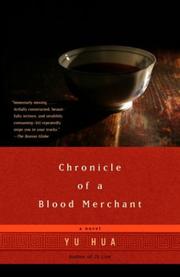 Yu Hua · 1995Chronicle of a Blood MerchantLvl 3Fast paced
 Lao She · 1937Rickshaw BoyLvl 3Medium pace
 Lu Xun · 1921The Real Story of Ah-Q and Other TalesLvl 5Fast paced
 Ding Ling · 1928Miss Sophie's DiaryLvl 4Fast paced
 Xiao Hong · 1935The Field of Life and DeathLvl 6Slow burn
 Franz Kafka · 1915The MetamorphosisLvl 4Medium pace