

Xiao Hong
China
Lyrical and unsentimental, drifting between vignettes with a poet's compression: hardship rendered plainly, without asking for pity.
Born Zhang Naiying to a landowning family in Heilongjiang, she fled an arranged marriage as a young woman and lived for years in poverty, at one point trapped and pregnant in a besieged hotel room before the writer Xiao Jun helped her escape. The two became partners and, briefly, a literary pair in Shanghai's leftist circles.
The Field of Life and Death, her 1935 novel of birth, toil, and death in a Manchurian village under Japanese occupation, appeared with a preface by Lu Xun, who championed her as one of the era's most original talents; she later wrote the autobiographical Tales of Hulan River, recalling her own childhood in luminous, fragmented vignettes.
Ill health, wartime dislocation, and a botched hospital operation compounded by the Japanese assault on Hong Kong killed her there in 1942, not yet thirty-one.
Lines of influence
No descendants recorded, yet.
Their books in the atlas
- 1935
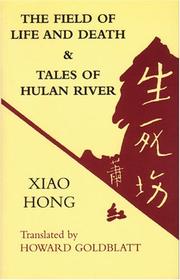 The Field of Life and DeathLvl 6historical fiction
 - 1942
 Tales of Hulan RiverLvl 5autobiographical fiction
Meanwhile, elsewhere
 1875–1955Thomas MannGermanyWestern Europe · Germany
 1880–1942Robert MusilAustriaWestern Europe · Austria
 1906–1989Samuel BeckettIreland / FranceWestern Europe · Ireland / France
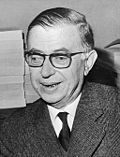 1905–1980Jean-Paul SartreFranceWestern Europe · France
 1873–1954ColetteFranceWestern Europe · France
 1869–1951André GideFranceWestern Europe · France
If you like Hong, try
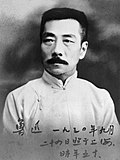 1881–1936Lu XunChinashaped Hong · shared movement: Modern Chinese Fiction · both write in Chinese
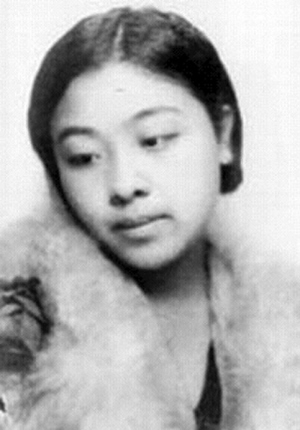 1904–1986Ding LingChinashared movement: Modern Chinese Fiction · both shaped by Xun · kindred genres: historical fiction, psychological novel
 1899–1966Lao SheChinashared movement: Modern Chinese Fiction · both shaped by Xun · kindred genres: historical fiction, tragedy
 b. 1960Yu HuaChinashared movement: Modern Chinese Fiction · both shaped by Xun · kindred genres: historical fiction, tragedy
 1330–1400Luo GuanzhongChinakindred genres: historical fiction · both write in Chinese · neighboring movements
 1715–1763Cao XueqinChinakindred genres: tragedy · both write in Chinese · neighboring movements