
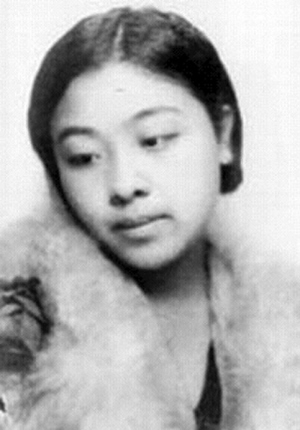
Ding Ling
China
Frank and interior, willing to sit inside a woman's desire and restlessness without apology: confessional prose that reads startlingly modern for its era.
Born Jiang Bingzhi in Hunan to a widowed, progressive mother who insisted on her education, Ding Ling entered Shanghai's radical literary circles in the late 1920s; her lover and fellow writer Hu Yepin was executed by the Nationalist government in 1931, hardening her politics. Miss Sophie's Diary, written just before, had already shocked readers with a young woman's frank confession of sexual longing.
She made her way to the Communist base at Yan'an and joined the Party, but her 1942 essay 'Thoughts on March 8,' criticizing the movement's own treatment of women, drew Mao's direct rebuke. Her novel The Sun Shines over the Sanggan River, about land reform, won the Soviet Union's Stalin Prize in 1951.
Denounced as a 'Rightist' in 1957, she spent more than a decade in labor camps and internal exile before being rehabilitated after Mao's death. She died in Beijing in 1986.
Lines of influence
No descendants recorded, yet.
Their books in the atlas
- 1928
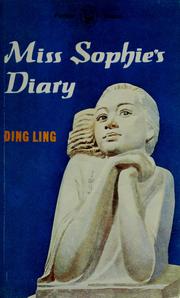 Miss Sophie's DiaryLvl 4epistolary
 - 1948
 The Sun Shines over the Sanggan RiverLvl 5political novel
Meanwhile, elsewhere
 1904–1991Graham GreeneEnglandWestern Europe · England
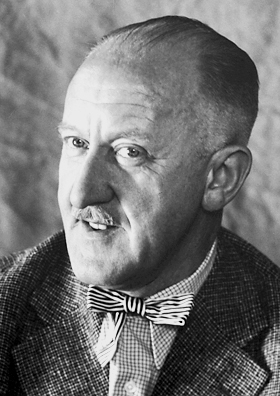 1902–1998Halldór LaxnessIcelandWestern Europe · Iceland
 1903–1987Marguerite YourcenarFrance / BelgiumWestern Europe · France / Belgium
 1900–1999Nathalie SarrauteFranceWestern Europe · France
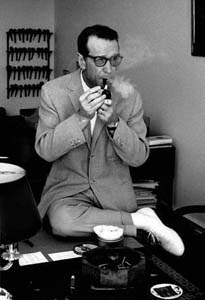 1903–1989Georges SimenonBelgiumWestern Europe · Belgium
 1900–1989Sándor MáraiHungaryRussia & Eastern Europe · Hungary
If you like Ling, try
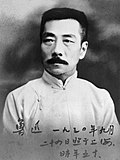 1881–1936Lu XunChinashaped Ling · shared movement: Modern Chinese Fiction · both write in Chinese
 1911–1942Xiao HongChinashared movement: Modern Chinese Fiction · both shaped by Xun · kindred genres: historical fiction, psychological novel
 1899–1966Lao SheChinashared movement: Modern Chinese Fiction · both shaped by Xun · kindred genres: historical fiction
 b. 1955Mo YanChinashared movement: Modern Chinese Fiction · both shaped by Xun · kindred genres: historical fiction, epistolary
 1330–1400Luo GuanzhongChinakindred genres: historical fiction · both write in Chinese · neighboring movements
 1640–1715Pu SonglingChinaboth write in Chinese · neighboring movements