

Mo Yan
China
Riotous and hallucinatory, piling sensory excess on brutal historical fact: carnal, loud, and folkloric even at its most violent.
Born Guan Moye in rural Gaomi, Shandong, he left school at eleven as the Cultural Revolution emptied the classrooms, working the fields through famine years before joining the People's Liberation Army, where he began writing. He took the pen name Mo Yan ('don't speak') as a private reminder of what plain speech had cost people around him under Mao.
Red Sorghum, narrated by a grandson mythologizing his outlaw grandparents' resistance to Japanese occupation, fused Faulkner's structure and García Márquez's excess onto Shandong soil and became Zhang Yimou's directorial debut on film. Life and Death Are Wearing Me Out later reincarnated an executed landlord as donkey, ox, pig, and dog to narrate five decades of land reform and revolution.
In 2012 he became the first Nobel laureate in literature still resident in mainland China, a choice that drew criticism from dissident writers over his ties to the Communist establishment even as his novels kept smuggling harsh history into folk-epic form.
Lines of influence
No descendants recorded, yet.
Their books in the atlas
- 1986
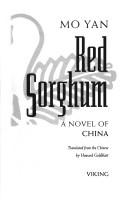 Red SorghumLvl 7magical realism
 - 1992
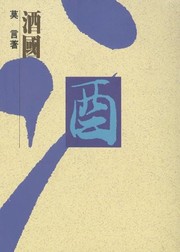 The Republic of WineLvl 8satire
 - 1996
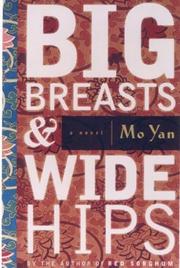 Big Breasts and Wide HipsLvl 8family saga
 - 2006
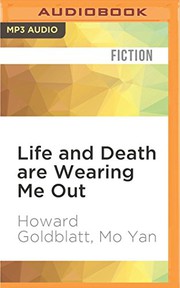 Life and Death Are Wearing Me OutLvl 7magical realism
 - 2009
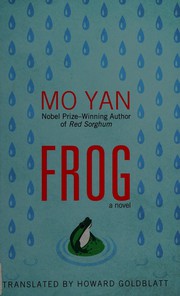 FrogLvl 6historical fiction
Meanwhile, elsewhere
 b. 1954Kazuo IshiguroEngland / JapanWestern Europe · England / Japan
 b. 1940Annie ErnauxFranceWestern Europe · France
 b. 1948Ian McEwanEnglandWestern Europe · England
 b. 1946Julian BarnesEnglandWestern Europe · England
 b. 1953Herta MüllerGermany / RomaniaWestern Europe · Germany / Romania
If you like Yan, try
 1927–2014Gabriel García MárquezColombiashaped Yan · shared movement: Magical Realism · both shaped by Faulkner
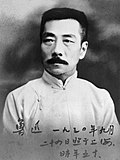 1881–1936Lu XunChinashaped Yan · shared movement: Modern Chinese Fiction · both write in Chinese
 1899–1966Lao SheChinashared movement: Modern Chinese Fiction · both shaped by Xun · kindred genres: historical fiction, war novel
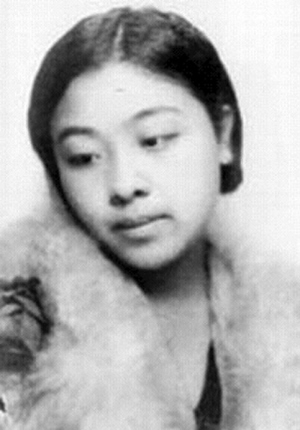 1904–1986Ding LingChinashared movement: Modern Chinese Fiction · both shaped by Xun · kindred genres: historical fiction, epistolary
 1897–1962William FaulknerUSAshaped Yan · neighboring movements
 1935–2023Kenzaburō ŌeJapanboth shaped by Faulkner · kindred genres: historical fiction, war novel · same region & era