
The Progressive Writers' Movement
The All-India Progressive Writers' Association pledges Urdu and Hindi fiction to the peasant, the woman, and the untouchable.
Unlike most literary movements, this one was actually founded: the All-India Progressive Writers' Association convened in 1936 with Munshi Premchand presiding over its first session, and its members pledged fiction explicitly to the peasant, the woman, and the untouchable rather than to courtly aesthetics or nationalist uplift. Premchand's own Godan, his last and greatest novel, follows a poor farmer's lifelong, doomed pursuit of owning a single cow, rendering rural debt and caste with a clarity that made it the Hindi novel's summit and the movement's founding proof of concept.
Saadat Hasan Manto carried the movement's unflinching honesty into Partition's carnage, and 'Toba Tek Singh' makes an asylum inmate's confusion over which side of the new border he belongs to the only sane response available to 1947's madness. Ismat Chughtai brought the same refusal to look away to gender and sexuality: 'The Quilt' got her hauled into an obscenity trial in colonial Lahore, and she showed up to court unrepentant and won. Between Premchand's rural conscience, Manto's Partition dread, and Chughtai's domestic defiance, Urdu and Hindi fiction found its modern moral seriousness.
How to spot it on the page
- Fiction explicitly pledged, by founding manifesto, to the peasant, the woman, and the untouchable
- Rural debt, caste, and land tenure rendered as the era's real political battlefield
- Partition's violence processed through confusion, absurdity, or madness rather than heroic narrative
- Gender and sexuality confronted directly enough to provoke actual obscenity trials
- A single ordinary life's doomed pursuit standing in for a whole social system
- Urdu and Hindi treated as equally capable of the era's harshest social realism
What it left behind
The Association itself splintered by the mid-1950s under Cold War pressure and internal politics, but the conscience it legislated never left Urdu and Hindi fiction. Manto's Partition stories remain the genre's unmatched account of 1947's madness, and Chughtai's unrepentant defiance opened the door for every South Asian woman writer since who has refused to soften material the courts would rather she left unwritten.
Defining works
For a guided order with notes, follow the reading path →
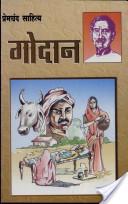
Premchand · 1936
A poor farmer's lifelong dream of owning a cow is crushed by debt, caste, and an unjust order. Premchand's final novel is the great work of rural Indian realism: tender, unflinching, foundational to Hindi fiction.
Saadat Hasan Manto · 1955
In an asylum whose lunatics must be sorted by nation, one man refuses to belong to either. Manto's title story is the definitive fiction of Partition's insanity: bloodshed and border-drawing seen without a shred of moralizing.
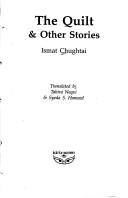
Ismat Chughtai · 1942
The title story's glancing view of a neglected wife's affair with her maid put Chughtai on trial for obscenity. A landmark of women's Urdu writing: female desire and bourgeois hypocrisy skewered with wicked candor.


