

J. M. Coetzee
South Africa / Australia
Austere and unadorned, present-tense sentences stripped of ornament: moral discomfort delivered without a single word wasted on comfort.
Coetzee trained as a computer programmer and literary scholar, earning a doctorate on Samuel Beckett in Texas before returning to teach in his native South Africa. His early novels, including Waiting for the Barbarians, worked as spare parables that never named the country or regime they indicted, a deliberate evasion of realism he defended as a way of refusing the state's own language.
Life & Times of Michael K won him the Booker Prize in 1983, and Disgrace won it again in 1999 (the first writer to take the prize twice) with a Cape Town professor's disgrace and his daughter's ordeal on a farm that offered readers no consoling resolution. He won the Nobel Prize in Literature in 2003, and by then had already emigrated to Australia, taking citizenship there in 2006 while continuing to write fiction that circled shame, animal suffering, and the limits of human sympathy.
Lines of influence
Their books in the atlas
- 1980
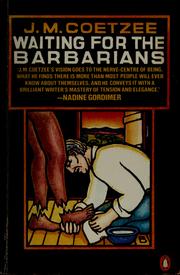 Waiting for the BarbariansLvl 5political novel
 - 1983
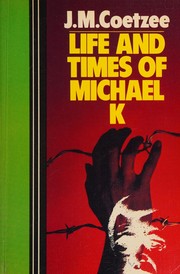 Life & Times of Michael KLvl 6political novel
 - 1986
 FoeLvl 6postmodern
 - 1990
 Age of IronLvl 6epistolary
 - 1994
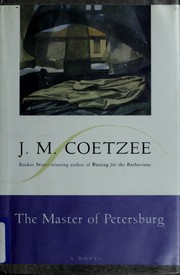 The Master of PetersburgLvl 7psychological novel
 - 1999
 DisgraceLvl 5psychological novel
Meanwhile, elsewhere
 b. 1940Annie ErnauxFranceWestern Europe · France
 b. 1933Penelope LivelyEnglandWestern Europe · England
 b. 1937Thomas PynchonUSANorth America · USA
 b. 1936Don DeLilloUSANorth America · USA
 b. 1939Margaret AtwoodCanadaNorth America · Canada
 b. 1940Maxine Hong KingstonUnited StatesNorth America · United States
If you like Coetzee, try
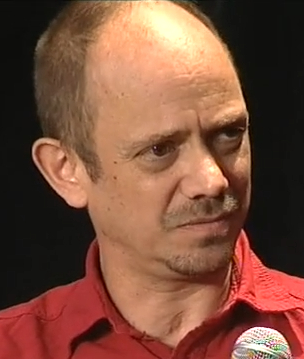 b. 1963Damon GalgutSouth Africashaped by Coetzee · shared movement: Postcolonial Literatures · kindred genres: political novel, postmodern
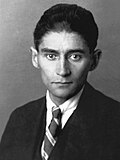 1883–1924Franz KafkaCzechia (Bohemia)shaped Coetzee · both shaped by Dostoevsky · neighboring movements
 b. 1952Orhan PamukTurkeyshared movement: Contemporary World Fiction · both shaped by Dostoevsky · kindred genres: psychological novel, philosophical novel
 1929–2023Milan KunderaCzechia / Franceshared movement: Contemporary World Fiction · both shaped by Kafka · kindred genres: political novel, philosophical novel
 b. 1970Han KangSouth Koreashared movement: Contemporary World Fiction · both shaped by Kafka · kindred genres: psychological novel, philosophical novel
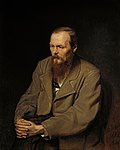 1821–1881Fyodor DostoevskyRussiashaped Coetzee · kindred genres: psychological novel, philosophical novel