

Age of Iron
J. M. Coetzee · b. 1940 · South Africa / Australia
Why it matters
A retired classics professor, dying of cancer, writes one long letter to the daughter she'll never see again while a homeless man moves into her garden and the township a few streets away burns. Coetzee's most intimate reckoning with apartheid's last, most violent years.
At a glance
An unbroken confessional letter carries both a private death and a country's violence at once.
Deep dive
Mrs. Curren has just been told she has months to live, and decides to spend what remains of that time writing a single, unsparing letter to the daughter she will likely never see again, from inside a country coming apart around her.
Written for readers who have finished the book. No plot recap, and nothing here is safe to read first.
Themes & symbolism
Mrs. Curren, a retired classics professor, learns she has terminal cancer on the same day she finds Vercueil, a homeless alcoholic, sleeping against her house, and Coetzee braids her two crises, a body failing from within and a country failing from within, into a single narrating voice, an unposted letter to her daughter in America that constitutes the novel's entire text. The letter form matters: Mrs. Curren is writing for an audience she loves but who has deliberately put an ocean between herself and apartheid, and every observation carries the strain of a mother trying to make her daughter understand a violence she chose not to witness firsthand.
Vercueil refuses every role Mrs. Curren tries to assign him, comforter, project, moral test, and Coetzee keeps him genuinely illegible across the whole novel: sometimes he seems to watch over her with real tenderness, sometimes he steals from her and disappears for days, and the ambiguity is the point. Mrs. Curren, a woman who has spent her whole life believing careful moral reasoning could sort people into categories, is given, in her final months, a companion who will not be sorted, and the novel insists that her inability to fully read him is itself part of what her privileged, insulated life never trained her to do.
The killing of Bheki, the teenage son of Mrs. Curren's housekeeper Florence, shot by police alongside his friend John after the two throw in with the township uprising, is the novel's structural center: Mrs. Curren witnesses the aftermath directly, the bodies, the bulldozed shack settlement, and Coetzee refuses her the moral high ground her education and good intentions have always assured her she occupied. Florence's own reaction, grief without illusion, no faith that white sympathy will change anything material, quietly indicts the whole framework Mrs. Curren has used her life to understand her own decency.
Hesiod's Bronze and Iron, Recast in Cape Town
Coetzee's title borrows Hesiod's myth of declining ages, gold, silver, bronze, heroic, iron, each worse than the last, ending in a present age of unrelenting toil and violence with no divine correction coming. Mrs. Curren invokes the myth directly as she watches the country's cruelty compound around her own dying body, an age of iron with no bronze age of open warfare left to graduate into, just the grinding, undeclared kind apartheid was already running on. Coetzee lets her classical education supply the vocabulary for despair even as the novel makes clear that vocabulary was never sufficient equipment for actually living through what it describes.
The last seal: what actually happens, and why it lands the way it does.
The ending, explained
Mrs. Curren's cancer and the country's violence reach their final stage together: her letters grow shorter and more halting as her body fails, and the narration itself effectively stops rather than concludes, the last entries trailing into fragments. In the closing scene she wakes freezing and asks Vercueil directly whether this is the day; without answering in words, he climbs into the bed and holds her, the two bodies pressed together for warmth neither can really supply. Her final line, that he cannot make her any warmer, closes the novel on an image of comfort offered honestly and still, plainly, not enough, Coetzee's refusal to grant either woman or country a deathbed redemption neither has earned.
Where to go next
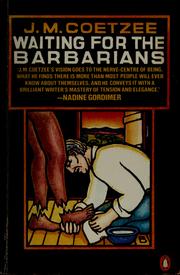 J. M. Coetzee · 1980Waiting for the BarbariansLvl 5Medium pace
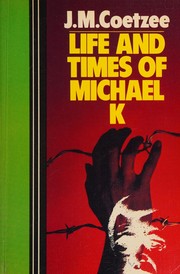 J. M. Coetzee · 1983Life & Times of Michael KLvl 6Slow burn
 J. M. Coetzee · 1986FoeLvl 6Slow burn
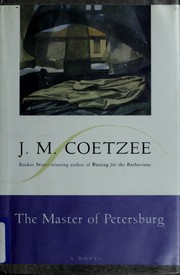 J. M. Coetzee · 1994The Master of PetersburgLvl 7Slow burn
 J. M. Coetzee · 1999DisgraceLvl 5Medium pace
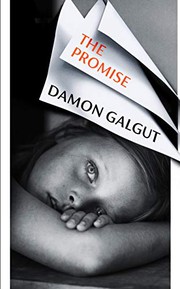 Damon Galgut · 2021The PromiseLvl 6Medium pace