

Annie Ernaux
France
Flat, exact, stripped of consolation: sentences like sworn testimony, where the refusal to dramatize is itself the emotion.
Born above her parents' café-grocery in Yvetot, Ernaux crossed France's sharpest border, the one between classes, by way of a teaching degree, and has spent her career going back over the crossing. Cleaned Out (1974) began it with the abortion the law then forbade her to name; A Man's Place and A Woman's Story autopsied, with a daughter's guilt, the parents her education taught her to see from outside.
She calls her method écriture plate, flat writing: no metaphor, no absolution, the diary and the photograph treated as evidence. The Years (2008) scaled it to a whole generation: sixty years of French life narrated by a 'we' from which the 'I' has almost vanished. The 2022 Nobel confirmed what her readers already knew: the scandalously personal had become the collective record.
Lines of influence
No descendants recorded, yet.
Their books in the atlas
- 1983
 A Man's PlaceLvl 3autobiographical fiction
 - 2008
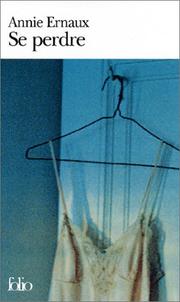 The YearsLvl 6autobiographical fiction
Meanwhile, elsewhere
 b. 1937Thomas PynchonUSANorth America · USA
 b. 1936Don DeLilloUSANorth America · USA
 b. 1940Maxine Hong KingstonUnited StatesNorth America · United States
 b. 1938Joyce Carol OatesUnited StatesNorth America · United Statesb. 1928William KennedyUnited StatesNorth America · United States
 b. 1935E. Annie ProulxUnited StatesNorth America · United States
If you like Ernaux, try
 1871–1922Marcel ProustFranceshaped Ernaux · both shaped by Flaubert · both write in French
 b. 1968Karl Ove KnausgaardNorwayshared movement: Autofiction & the Self · both shaped by Proust · kindred genres: autobiographical fiction, family saga
 b. 1957Emmanuel CarrèreFranceshared movement: Autofiction & the Self · kindred genres: autobiographical fiction · both write in French
 1905–1980Jean-Paul SartreFranceboth shaped by Flaubert · both write in French · neighboring movements
 1821–1880Gustave FlaubertFranceshaped Ernaux · both write in French
 1917–1976Tove DitlevsenDenmarkshared movement: Autofiction & the Self · kindred genres: autobiographical fiction · same region & era