

Han Kang
South Korea
Spare and unflinching, cold on the surface and molten underneath: violence rendered in exact, quiet sentences that never look away.
Han Kang was born in Gwangju and moved with her family to Seoul only months before the 1980 massacre there, a near-miss that haunted her work for decades before she confronted it directly. Her father, Han Seung-won, was also a novelist, and she started as a poet before turning to fiction, studying Korean literature at Yonsei University.
The Vegetarian, in which a woman's refusal to eat meat unravels into her family's violence and her own wish to become a plant, won the International Booker Prize in 2016 with translator Deborah Smith. Human Acts returned her to Gwangju directly, narrating the massacre through its dead and its survivors, closing with the author's own testimony.
In 2024 she became the first Korean writer, and first Asian woman, to win the Nobel Prize in Literature, cited for prose that 'confronts historical traumas and exposes the fragility of human life.'
Lines of influence
No descendants recorded, yet.
Their books in the atlas
- 2007
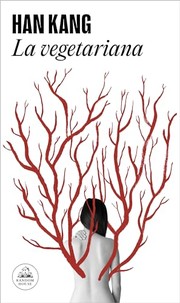 The VegetarianLvl 6psychological novel
 - 2011
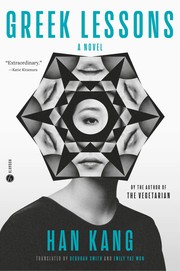 Greek LessonsLvl 7psychological novel
 - 2014
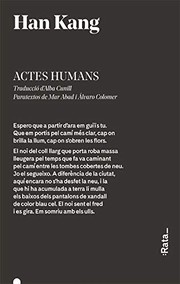 Human ActsLvl 6historical fiction
 - 2021
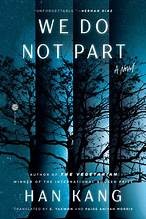 We Do Not PartLvl 7historical fiction
Meanwhile, elsewhere
 b. 1940Annie ErnauxFranceWestern Europe · France
 b. 1948Ian McEwanEnglandWestern Europe · England
 b. 1946Julian BarnesEnglandWestern Europe · England
 b. 1967Rachel CuskUnited Kingdom / CanadaWestern Europe · United Kingdom / Canada
 b. 1953Herta MüllerGermany / RomaniaWestern Europe · Germany / Romania
 b. 1968Karl Ove KnausgaardNorwayWestern Europe · Norway
If you like Kang, try
 b. 1954Kazuo IshiguroEngland / Japanshared movement: Contemporary World Fiction · both shaped by Kafka · kindred genres: psychological novel, historical fiction
 b. 1978Samanta SchweblinArgentinashared movement: Contemporary World Fiction · both shaped by Kafka · kindred genres: psychological novel
 b. 1940J. M. CoetzeeSouth Africa / Australiashared movement: Contemporary World Fiction · both shaped by Kafka · kindred genres: psychological novel, philosophical novel
 1944–2001W. G. SebaldGermany / Englandshared movement: Contemporary World Fiction · both shaped by Kafka · kindred genres: psychological novel, war novel
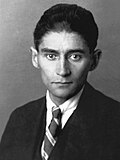 1883–1924Franz KafkaCzechia (Bohemia)shaped Kang · neighboring movements
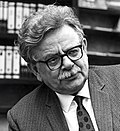 1905–1994Elias CanettiBulgaria / UKboth shaped by Kafka · kindred genres: psychological novel · neighboring movements