
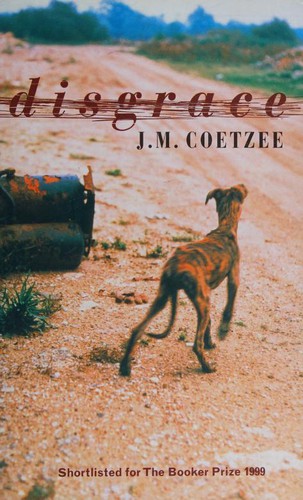
Disgrace
J. M. Coetzee · b. 1940 · South Africa / Australia
Why it matters
A Cape Town professor's fall and his daughter's ordeal on an Eastern Cape farm: the new South Africa refusing every consolation. A second Booker, endless argument, and prose pared to the bone.
At a glance
Stripped-down present-tense prose is easy to read but morally unresolved and bleak.
Deep dive
A novel that refuses its protagonist every redemption it dangles, then hands him one so small and unsentimental it barely counts as consolation.
Written for readers who have finished the book. No plot recap, and nothing here is safe to read first.
Themes & symbolism
David Lurie's disciplinary hearing is the moral key to everything after it: offered an easy public confession that would let him keep his job, he refuses to perform contrition he doesn't feel, calling his affair with Melanie a matter of desire rather than power. That refusal to lie for absolution reappears, transfigured, in his daughter Lucy, who refuses to frame her rape in the terms — police report, victimhood, restitution — that would let the old order feel it had responded correctly. Coetzee sets father and daughter as mirror cases of the same principle: neither will accept the story other people need them to tell, even when telling it would cost them less.
The farm attack inverts the novel's opening completely — the man who used his position over a young woman is now powerless in his own body, burned and beaten while men take what they want from someone he cannot protect — and Coetzee refuses to let David's suffering redeem him in any conventional sense. What changes David isn't the attack but the dogs: at Bev Shaw's clinic he moves from assisting euthanasias to personally driving the corpses to be incinerated, insisting on carrying them himself rather than letting them be dumped and beaten flat by the collection trucks. It's a private liturgy for beings with no claim on dignity in anyone else's eyes, and it's the only ethical project the novel lets him complete.
Petrus and the new arithmetic of land
Petrus, Lucy's neighbor and former assistant, embodies the novel's coldest post-apartheid logic: he offers Lucy protection precisely by absorbing her into his own household and land claim, becoming, in effect, her husband in exchange for security, while remaining evasive about whether he knew the attackers beforehand. Coetzee gives him no interiority to explain or excuse this — Petrus is simply the new order asserting itself with the same mixture of pragmatism and menace the old order once used, and Lucy's acceptance of the arrangement, staying and carrying a pregnancy from the assault rather than leaving, is her own refusal to be a victim on anyone else's terms, including the reader's.
The last seal: what actually happens, and why it lands the way it does.
The ending, explained
The novel closes at the clinic, where David has grown attached to a crippled young dog he calls 'no name of his own' and has, unusually, delayed its euthanasia week after week. In the final scene he carries it in himself and tells Bev, 'Yes, I am giving him up.' It's a small act with no audience and no reward — no reconciliation with Lucy, no restored career, no redress — but it's a real one: David choosing, finally, to relinquish something he loves rather than protect it for his own comfort. Coetzee lands the book on that scale deliberately, grace as a private, unwitnessed transaction rather than a public reckoning.
Where to go next
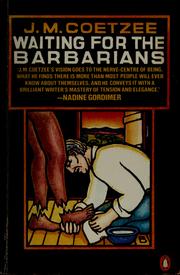 J. M. Coetzee · 1980Waiting for the BarbariansLvl 5Medium pace
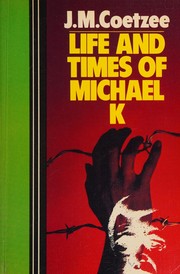 J. M. Coetzee · 1983Life & Times of Michael KLvl 6Slow burn
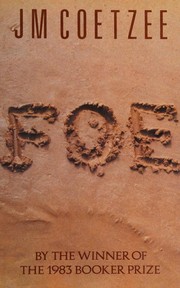 J. M. Coetzee · 1986FoeLvl 6Slow burn
 J. M. Coetzee · 1990Age of IronLvl 6Slow burn
 J. M. Coetzee · 1994The Master of PetersburgLvl 7Slow burn
 Damon Galgut · 2021The PromiseLvl 6Medium pace