

Herta Müller
Germany / Romania
Dense and imagistic, ordinary objects charged with menace: short, unsettling sentences that make fear feel like a physical texture.
Müller grew up in a German-speaking Banat Swabian village in Romania, in a community still shadowed by the war: her father had served in the Waffen-SS, and her mother spent five years in a Soviet forced-labor camp after 1945, an ordeal Müller later reconstructed in The Hunger Angel using the memories of the poet Oskar Pastior, a fellow deportee. Working as a translator in a factory, she refused repeated pressure to inform for Ceaușescu's secret police, the Securitate, and was fired and harassed for it.
She emigrated to West Germany in 1987, continuing to write about surveillance, deprivation, and the texture of life under dictatorship in a dense, imagistic prose built from odd, precise physical detail. She won the Nobel Prize in Literature in 2009, cited for work that depicts 'the landscape of the dispossessed.'
Their books in the atlas
- 1994
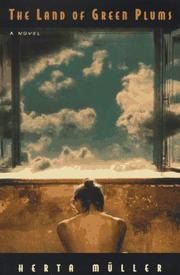 The Land of Green PlumsLvl 8political novel
 - 2009
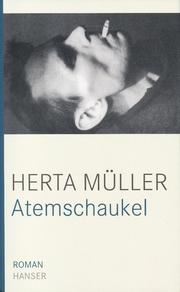 The Hunger AngelLvl 7war novel
Meanwhile, elsewhere
 b. 1948Svetlana AlexievichBelarusRussia & Eastern Europe · Belarus
 b. 1943Ludmila UlitskayaRussiaRussia & Eastern Europe · Russia
 b. 1942Péter NádasHungaryRussia & Eastern Europe · Hungary
 b. 1937Thomas PynchonUSANorth America · USA
 b. 1936Don DeLilloUSANorth America · USA
 b. 1943Marilynne RobinsonUnited StatesNorth America · United States
If you like Müller, try
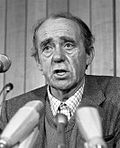 1917–1985Heinrich BöllGermanykindred genres: psychological novel, political novel · both write in German · same region & era
 b. 1967Jenny ErpenbeckGermanykindred genres: psychological novel, political novel · both write in German · same region & era
 b. 1946Elfriede JelinekAustriakindred genres: psychological novel · both write in German · same region & era
 1931–1989Thomas BernhardAustriakindred genres: psychological novel · both write in German · same region & era
 1929–2011Christa WolfGermanykindred genres: political novel, psychological novel · both write in German · same region & era
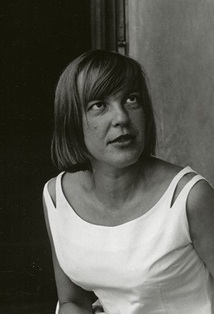 1926–1973Ingeborg BachmannAustriakindred genres: psychological novel · both write in German · same region & era