
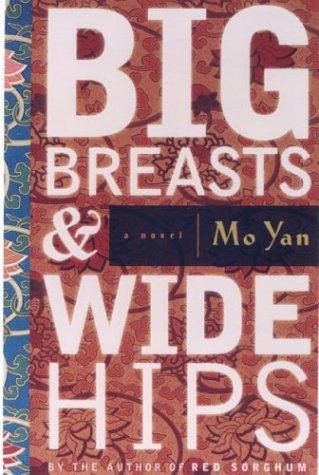
Big Breasts and Wide Hips
Mo Yan · b. 1955 · China
Originally Fengru Feitun (Chinese) · translated by Howard Goldblatt
Why it matters
A mother bears eight daughters and one weak son across a century of war, famine, and revolution in Shandong, her body and her land ravaged by the same forces. Mo Yan's longest and most controversial novel, censored at home for its frank sexuality and thoroughly unheroic history.
At a glance
An enormous cast and century-spanning structure carry graphic violence and sexuality throughout.
Deep dive
A mother bears eight daughters by seven different men before finally getting the son she's been praying for, and Mo Yan spends a century watching what that single son does with a devotion no one else in the family was ever given.
Written for readers who have finished the book. No plot recap, and nothing here is safe to read first.
Themes & symbolism
Shangguan Lu, married into a family that blames her for their line's failure to produce a male heir, conceives her nine children with a succession of men outside her impotent husband, including the twins Jintong and Yunü, fathered by a Swedish pastor, Malory. Mo Yan makes Shangguan Lu's body itself the novel's central historical document: her pregnancies track a full century of Shandong's convulsions, warlord conflict, the Japanese occupation, civil war, the Great Leap Forward, the Cultural Revolution, each daughter born into and marked by whichever catastrophe happens to be underway. The son the whole family has been demanding since the novel's opening pages arrives as an anticlimax dressed as a miracle, and Mo Yan spends the rest of the book unpacking exactly how badly that miracle turns out.
Jintong grows up nursed at his mother's breast well past any ordinary age and develops an obsession with breasts, his mother's, his sisters', strangers', that never resolves into adult desire so much as calcifies into permanent dependency; he is, functionally, unable to eat solid food or function as a man for most of his adult life. Mo Yan uses Jintong's arrested development as an unsparing rebuke to the very son-preference that produced him: eight daughters absorb war, famine, forced marriages, and political persecution with a resilience the novel treats as heroic, while the one child the family valued above all of them collapses under expectations he was never equipped to meet.
Eight Sisters Carrying a Century Their Brother Can't
Each of Jintong's sisters absorbs a different strand of twentieth-century Chinese catastrophe, one is executed as a counter-revolutionary, another is sold into a marriage abroad, another becomes entangled with competing political factions during the civil war, and Mo Yan gives their accumulated suffering a scale and specificity that dwarfs anything that happens to Jintong himself. The novel's title names the sisters' bodies rather than the brother's, and that naming is the book's real argument: the fertility and endurance history actually depended on belonged to the daughters the family never valued, while the son they prized above all of them turns out to be the household's most fragile member.
The last seal: what actually happens, and why it lands the way it does.
The ending, explained
Jintong survives into old age still unable to escape his infantile fixation, and his late, grim entanglement with a woman he kills after acting on a distorted final wish leaves him imprisoned rather than redeemed; by the time he's released, it's his frail, elderly mother who is still, absurdly, trying to finish raising him, sending the man in his forties to a single-breasted woman running a recycling center in a last, humiliating attempt to make him self-sufficient. Mo Yan closes not on triumph or tragedy in any conventional shape but on exhaustion: the son the family spent a century sacrificing daughters to produce ends the novel as its most dependent survivor, still nursing, in every sense, on a mother who has nothing left to give him.
Where to go next
 Mo Yan · 1986Red SorghumLvl 7Fast paced
 Mo Yan · 1992The Republic of WineLvl 8Medium pace
 Mo Yan · 2006Life and Death Are Wearing Me OutLvl 7Fast paced
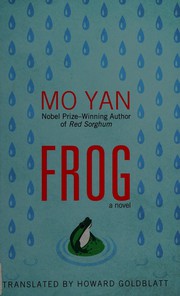 Mo Yan · 2009FrogLvl 6Medium pace
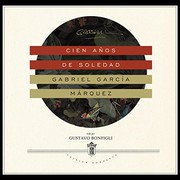 Gabriel García Márquez · 1967One Hundred Years of SolitudeLvl 6Medium pace
 Lu Xun · 1921The Real Story of Ah-Q and Other TalesLvl 5Fast paced