
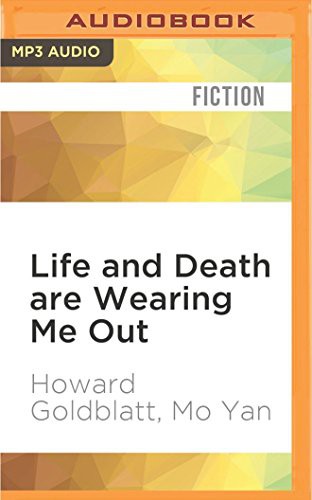
Life and Death Are Wearing Me Out
Mo Yan · b. 1955 · China
Originally Shengsi Pilao (Chinese) · translated by Howard Goldblatt
Why it matters
A landlord executed in 1950 is reincarnated as donkey, ox, pig, and dog, watching half a century of Chinese history from the animals' eyes. Mo Yan's exuberant, carnal epic of the land reforms and the Mao era.
At a glance
Sprawling multi-narrator epic spanning five reincarnated lives and five decades.
Deep dive
A landlord executed at the start of China's land reform spends the next half century reincarnated as a donkey, an ox, a pig, and a dog, watching from just outside the human species exactly what gets done to the country in his name and against it.
Written for readers who have finished the book. No plot recap, and nothing here is safe to read first.
Themes & symbolism
Ximen Nao, shot in 1950 for the crime of having been a landlord, protests his innocence to the underworld's Lord Yama with such stubbornness that he's returned to earth again and again, first as a donkey, then an ox, a pig, a dog, and finally a human child, each life dropped back into the same village and the same unfolding decades of land reform, collectivization, famine, and the Cultural Revolution. Mo Yan uses the reincarnation device less as fantasy than as a documentary trick: an animal's-eye view of Chinese history lets him narrate atrocities and absurdities that a purely human narrator, embedded in the ideology of any given decade, might flinch from or rationalize.
Anchoring all five lives is Lan Lian, Ximen Nao's former hired hand, who refuses to join the agricultural collective and keeps farming his own small plot independently through every campaign that follows, an act of quiet, apolitical stubbornness that costs him constantly and that the novel treats as the era's one unbroken thread of integrity. Ximen Nao's animal incarnations orbit Lan Lian's farm across the decades, ox and donkey laboring beside him, pig and dog watching his family's fortunes rise and fall, so that the reincarnated landlord ends up a witness to precisely the kind of resistance his own class position never allowed him to practice.
An Ox Beaten for a Man's Politics
When Ximen Nao is reincarnated as Lan Lian's ox during the height of collectivization, the animal becomes a proxy target for the political fury the village can't safely direct at Lan Lian himself, beaten and worked half to death by cadres eager to punish the farmer's refusal to collectivize through an animal that can't file a complaint. Mo Yan lets the ox's physical suffering carry an argument the era's human characters mostly can't afford to say aloud, that the campaigns supposedly aimed at correcting class injustice kept finding new, deniable ways to inflict the same cruelty on anyone who wouldn't fall in line.
The last seal: what actually happens, and why it lands the way it does.
The ending, explained
Ximen Nao's fifth and final reincarnation arrives in the year 2000 as a human baby born with an oversized head, a child who retains, however dimly, the accumulated memory of every animal life that came before, and who narrates the novel's final movement alongside Lan Jiefang, Lan Lian's own son. By the time this last incarnation is born, Lan Lian has died still farming his single independent plot, having never once joined the collective across fifty years of pressure to do so, and the novel closes with his stubbornness outlasting every campaign built to break it. Ximen Nao's long cycle of punishment ends not in vindication or revenge but in something closer to exhausted witness, a landlord's soul finally human again in a China that has moved so far past the world that killed him that his original grievance barely still applies.
Where to go next
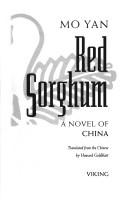 Mo Yan · 1986Red SorghumLvl 7Fast paced
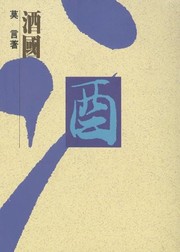 Mo Yan · 1992The Republic of WineLvl 8Medium pace
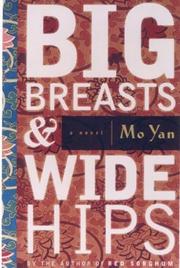 Mo Yan · 1996Big Breasts and Wide HipsLvl 8Fast paced
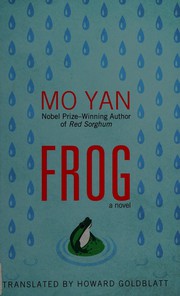 Mo Yan · 2009FrogLvl 6Medium pace
 Gabriel García Márquez · 1967One Hundred Years of SolitudeLvl 6Medium pace
 Lu Xun · 1921The Real Story of Ah-Q and Other TalesLvl 5Fast paced