
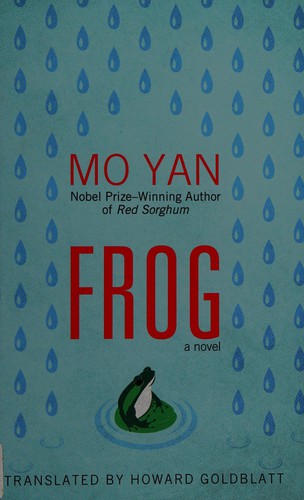
Frog
Mo Yan · b. 1955 · China
Originally Wa (Chinese) · translated by Howard Goldblatt
Why it matters
A rural midwife who once delivered thousands of babies is later forced to enforce the one-child policy's abortions and sterilizations, her guilt narrated through letters to a Japanese writer. Mo Yan's most directly political late novel, confronting a policy few dared fictionalize so bluntly.
At a glance
A layered epistolary frame, plus an embedded play in its final section, complicate an otherwise plain narrative voice.
Deep dive
A playwright writes long letters to a Japanese correspondent trying to explain his aunt, once the most beloved midwife in the county, later the one who enforced the one-child policy on the same women whose babies she used to deliver.
Written for readers who have finished the book. No plot recap, and nothing here is safe to read first.
Themes & symbolism
Gugu delivers what seems like the whole of one rural county's population by hand through the 1950s and 60s, a genuinely beloved figure whose skill saves mothers and infants that an older, more superstitious style of midwifery routinely lost, and Mo Yan spends the novel's early sections earning every bit of that reputation before turning it inside out: once the one-child policy takes hold, Gugu becomes the local Party's most effective enforcer of forced abortions and sterilizations, hunting down women, including relatives, who try to hide unauthorized pregnancies. The narrator, Gugu's nephew, nicknamed Tadpole, addresses the whole account as a series of letters to Sugitani Yoshito, a Japanese writer, and the epistolary frame keeps the story's confession pointed permanently outward, a Chinese man explaining his own family's collaboration with state violence to someone from outside the system that produced it.
The novel's cruelest personal cost lands directly on Tadpole: his own wife dies during a forced late-term abortion Gugu herself administers, carrying out policy against her own family with the same competence she once brought to delivering babies. Mo Yan refuses to let Gugu become a simple villain even here; her later life is dominated by visible, unresolved guilt, and her marriage to Hao Dashou, a folk artist who carves lifelike clay figures of infants, becomes her way of materializing every child she believes her enforcement work destroyed, a private museum of guilt built one figurine at a time.
A Pun the Whole Novel Is Built On
The Chinese word for frog, wa, sounds identical to the word for a baby's cry, and Mo Yan keeps that pun audible throughout, frogs swarming a pond in one of the novel's more surreal passages read simultaneously as an amphibian plague and as the accumulated cries of every aborted or forcibly prevented child in the county. Hao Dashou's clay figures work the same double register, folk art on the surface and a private memorial underneath, and the novel's late embedded play makes both metaphors literal at once, turning Gugu's guilt into something staged rather than merely narrated.
The last seal: what actually happens, and why it lands the way it does.
The ending, explained
The novel's final section abandons prose altogether for a nine-act play, written by Tadpole, in which Gugu's decades of enforcement come back to confront her directly, dramatized rather than simply recounted, as if the material had finally outgrown what a letter could hold. Onstage, the accumulated guilt Gugu has spent years displacing into Hao Dashou's clay children becomes explicit: she is haunted, literally staged as haunted, by the specific women and infants her work destroyed, including Tadpole's own wife. Mo Yan doesn't offer Gugu absolution in the play any more than the letters did; he offers her a form finally equal to the scale of what she did, a woman who spent her life delivering the county's children forced, at last, to sit in a theater built entirely out of the ones she took.
Where to go next
 Mo Yan · 1986Red SorghumLvl 7Fast paced
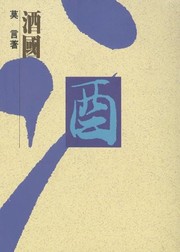 Mo Yan · 1992The Republic of WineLvl 8Medium pace
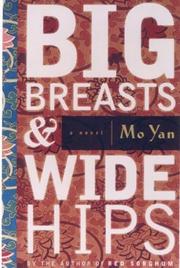 Mo Yan · 1996Big Breasts and Wide HipsLvl 8Fast paced
 Mo Yan · 2006Life and Death Are Wearing Me OutLvl 7Fast paced
 Gabriel García Márquez · 1967One Hundred Years of SolitudeLvl 6Medium pace
 Lu Xun · 1921The Real Story of Ah-Q and Other TalesLvl 5Fast paced