

Thomas Mann
Germany
Stately, ironic, richly furnished with ideas: long essayistic sentences that treat illness, art, and decline as related symptoms of the same malaise.
Mann drew Buddenbrooks (1901), his first novel, straight from his own merchant family's decline in Lübeck; he was twenty-five when it appeared. A visit to his wife Katia at a Swiss tuberculosis sanatorium seeded The Magic Mountain (1924), which turned the enforced idleness of illness into a debate about European civilization on the eve of war.
He won the Nobel Prize in 1929 and, unlike much of Germany's establishment, refused Hitler outright: he left in 1933, settled eventually in the United States, took American citizenship, and broadcast anti-Nazi radio addresses back into Germany throughout the war. Doctor Faustus (1947), a composer's pact with the devil retelling Germany's own catastrophe, was written in that exile. McCarthy-era suspicion pushed him back to Europe, where he died in Zurich in 1955.
Lines of influence
No descendants recorded, yet.
Their books in the atlas
- 1901
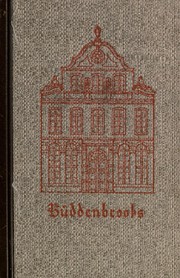 BuddenbrooksLvl 5family saga
 - 1912
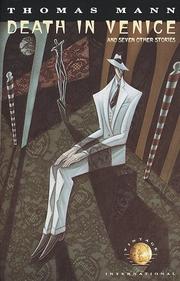 Death in VeniceLvl 6psychological novel
 - 1924
 The Magic MountainLvl 8philosophical novel
 - 1933
 Joseph and His BrothersLvl 8epic
 - 1947
 Doctor FaustusLvl 8philosophical novel
 - 1954
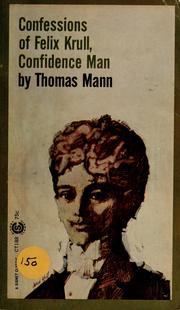 Confessions of Felix Krull, Confidence ManLvl 5picaresque
Meanwhile, elsewhere
 1870–1953Ivan BuninRussiaRussia & Eastern Europe · Russia
 1878–1968Upton SinclairUnited StatesNorth America · United States
 1873–1952Mariano AzuelaMexicoLatin America · Mexico
 1873–1947Willa CatherUnited StatesNorth America · United States
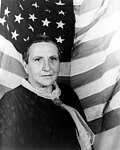 1874–1946Gertrude SteinUnited StatesNorth America · United States
 1884–1969Rómulo GallegosVenezuelaLatin America · Venezuela
If you like Mann, try
 1877–1962Hermann HesseGermany / Switzerlandshared movement: High Modernism · both shaped by Goethe · kindred genres: philosophical novel, modernist
 1828–1910Leo TolstoyRussiashaped Mann · kindred genres: philosophical novel, tragedy · neighboring movements
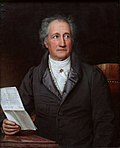 1749–1832Johann Wolfgang von GoetheGermanyshaped Mann · kindred genres: philosophical novel, tragedy · both write in German
 1878–1957Alfred DöblinGermanyshared movement: High Modernism · both write in German · same region & era
 1882–1941Virginia WoolfEnglandshared movement: High Modernism · kindred genres: family saga, historical fiction · same region & era
 1888–1935Fernando PessoaPortugalshared movement: High Modernism · kindred genres: philosophical novel, epic · same region & era