

Alfred Döblin
Germany
Overwhelming urban montage: newspaper headlines, street slang, and Biblical refrains crashing together into a single chorus that drowns out any one voice, including the hero's.
Döblin trained as a physician and practiced for years as a neurologist and psychiatrist in working-class Berlin, including the Alexanderplatz district itself, treating patients whose lives fed directly into the novel that made him famous. Berlin Alexanderplatz (1929) brought the fractured, collage-like technique of Joyce's Ulysses to a German ex-convict trying and failing to go straight amid the city's noise.
Jewish and a prominent target of Nazi hostility, Döblin fled Germany in 1933, eventually reaching the United States by way of France; in exile he converted to Catholicism. He returned to occupied Germany after the war to work in cultural administration for the French zone, found the postwar literary scene largely indifferent to him, and moved back to France in frustration.
He died there, near Strasbourg, in 1957.
Lines of influence
No descendants recorded, yet.
Their books in the atlas
- 1929
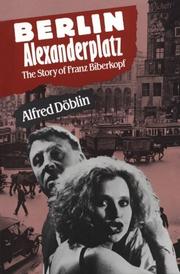 Berlin AlexanderplatzLvl 8modernist
Meanwhile, elsewhere
 1878–1968Upton SinclairUnited StatesNorth America · United States
 1870–1953Ivan BuninRussiaRussia & Eastern Europe · Russia
 1873–1952Mariano AzuelaMexicoLatin America · Mexico
 1884–1969Rómulo GallegosVenezuelaLatin America · Venezuela
 1884–1964Halide Edip AdıvarTurkeyMiddle East · Turkey
 1886–1965Jun'ichirō TanizakiJapanEast Asia · Japan
If you like Döblin, try
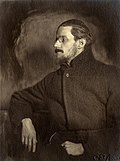 1882–1941James JoyceIrelandshaped Döblin · shared movement: High Modernism · kindred genres: modernist
 1900–1976Eyvind JohnsonSwedenshared movement: High Modernism · both shaped by Joyce · kindred genres: modernist
 1882–1941Virginia WoolfEnglandshared movement: High Modernism · both shaped by Joyce · kindred genres: modernist
 1912–1990Patrick WhiteAustraliashared movement: High Modernism · both shaped by Joyce · kindred genres: modernist
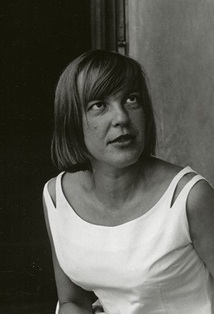 1926–1973Ingeborg BachmannAustriakindred genres: modernist · both write in German · neighboring movements
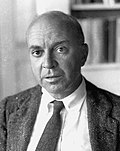 1896–1970John Dos PassosUSAboth shaped by Joyce · kindred genres: modernist · neighboring movements