

Leo Tolstoy
Russia
Vast, clear, and unshowy: sentences that seem to disappear into the reality they describe, moving with total assurance from a battlefield to a debutante's first ball.
Born into aristocracy at Yasnaya Polyana, Tolstoy gambled away a fortune as a young officer, then fought at the siege of Sevastopol during the Crimean War, an experience that fed his lifelong suspicion of glory and battle-narrative alike. He returned home to run his estate, founded a school for peasant children, and spent the next decades writing War and Peace and Anna Karenina at a pitch of realism no one has matched since.
In his fifties he underwent a moral and religious conversion, renouncing his own novels as vanity and preaching a pacifist, ascetic Christianity that got him excommunicated by the Orthodox Church and made him a model for Gandhi. At eighty-two he fled his estate and his wife in the night; he died days later of pneumonia at a remote railway station, the most famous man in Russia collapsing among strangers.
Lines of influence
Their books in the atlas
- 1869
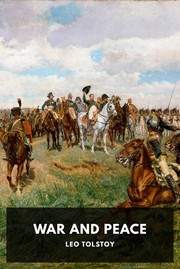 War and PeaceLvl 7epic
 - 1878
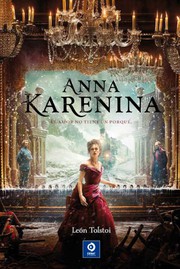 Anna KareninaLvl 5family saga
 - 1886
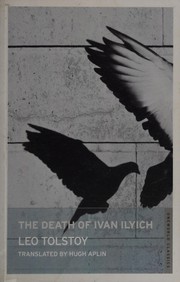 The Death of Ivan IlyichLvl 4philosophical novel
 - 1889
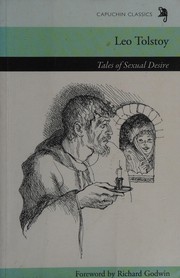 The Kreutzer SonataLvl 4psychological novel
 - 1899
 ResurrectionLvl 5philosophical novel
 - 1912
 Hadji MuradLvl 4historical fiction
Meanwhile, elsewhere
 1830–1914Paul HeyseGermanyWestern Europe · Germany
 1832–1910Bjørnstjerne BjørnsonNorwayWestern Europe · Norway
 1828–1905Jules VerneFranceWestern Europe · France
 1835–1910Mark TwainUSANorth America · USA
 1840–1928Thomas HardyEnglandWestern Europe · England
 1840–1922Giovanni VergaItalyWestern Europe · Italy
If you like Tolstoy, try
 1860–1904Anton ChekhovRussiashaped by Tolstoy · shared movement: The Russian Golden Age · both shaped Grossman
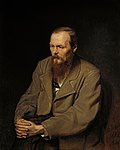 1821–1881Fyodor DostoevskyRussiashared movement: The Russian Golden Age · both shaped by Pushkin · both shaped Solzhenitsyn
 1799–1837Alexander PushkinRussiashaped Tolstoy · shared movement: The Russian Golden Age · both write in Russian
 1905–1984Mikhail SholokhovRussiashaped by Tolstoy · kindred genres: family saga, historical fiction · both write in Russian
 1918–2008Aleksandr SolzhenitsynRussiashaped by Tolstoy · kindred genres: philosophical novel, psychological novel · both write in Russian
 1818–1883Ivan TurgenevRussiashared movement: The Russian Golden Age · both shaped by Pushkin · kindred genres: psychological novel, family saga