
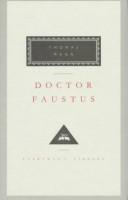
Doctor Faustus
Thomas Mann · 1875–1955 · Germany
Originally Doktor Faustus (German)
Why it matters
A composer trades his soul for twenty-four years of demonic musical genius, and his biography becomes Mann's reckoning with how his own Germany sold itself to fascism. The Faust myth remade as a nation's autopsy, Nietzsche audible on every page.
At a glance
Dense musicological and philosophical digression carries as much weight as the plot.
Deep dive
Thomas Mann tells one composer's pact with the devil as narrated, decades later, by his terrified best friend, and lets Germany's own collapse into fascism happen in the footnotes.
Written for readers who have finished the book. No plot recap, and nothing here is safe to read first.
Themes & symbolism
Serenus Zeitblom, a mild classics teacher and self-described humanist, narrates his dead friend's life as a biography written in real time against the collapse of the Germany around him, dating his own entries through 1943 to 1945 so that Adrian Leverkühn's decades-earlier bargain and the nation's contemporary ruin run on parallel clocks. Zeitblom's own horror at what he is chronicling, both the friend he loved and the country he still cannot fully renounce, keeps the narration from ever settling into simple biography; he is performing an autopsy on both at once and knows it.
Adrian contracts syphilis deliberately from a prostitute he calls Esmeralda, a disease that grants him roughly two and a half decades of extraordinary, feverish compositional genius before it destroys his mind entirely, and Mann stages the bargain's terms explicitly in a chapter where the devil appears to Adrian and spells out the exchange in plain language: creative greatness bought at the cost of any capacity for ordinary human warmth, since love, the devil insists, is the one thing the contract forbids him.
Schoenberg's Technique, Borrowed for a Devil's Pact
Mann worked closely with the philosopher and composer Theodor Adorno to give Adrian's fictional compositions real technical substance, and the twelve-tone method the novel presents as Adrian's damned invention is, unmistakably, Arnold Schoenberg's actual serialism, developed in real musical history without any pact involved. Schoenberg, still alive when the novel appeared, was furious at having his genuine technical breakthrough fictionally re-assigned to a syphilitic composer's bargain with the devil, and later editions carry an author's note acknowledging the borrowing, an unusually direct collision between a novel's invented history and the real one it was quietly rewriting.
A Chronology Timed to Germany's Collapse
Zeitblom dates his narration to track the actual last two years of the Second World War as he writes, so Allied advances and German defeats accumulate in his present-tense asides exactly as Adrian's genius-for-damnation bargain unfolds in the story he is telling from the past. The pairing is Mann's whole argument made structural rather than stated outright: a nation that traded its soul for the illusion of greatness is living out the same Faustian arithmetic Adrian agreed to decades earlier, and Zeitblom's horrified real-time commentary is the closest the novel comes to Mann's own verdict on his country.
The last seal: what actually happens, and why it lands the way it does.
The ending, explained
Adrian's final composition, The Lamentation of Doctor Faustus, inverts Beethoven's Ninth movement by movement, a deliberate retraction of the Ode to Joy's promise that suffering resolves into universal brotherhood, and he announces it to a room of assembled friends as, in effect, a confession of his pact with the devil rather than as a premiere. He collapses at the piano into the paralysis and madness the contract was always going to demand as payment, and lives another decade in that state under his mother's care before dying, his ruin running out its clock in step with a Germany Zeitblom watches, in the same final pages, finishing its own collapse.
Where to go next
 Thomas Mann · 1901BuddenbrooksLvl 5Slow burn
 Thomas Mann · 1912Death in VeniceLvl 6Slow burn
 Thomas Mann · 1924The Magic MountainLvl 8Slow burn
 Thomas Mann · 1933Joseph and His BrothersLvl 8Slow burn
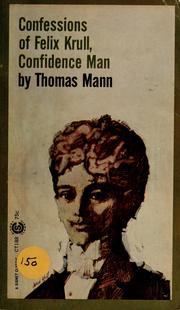 Thomas Mann · 1954Confessions of Felix Krull, Confidence ManLvl 5Medium pace
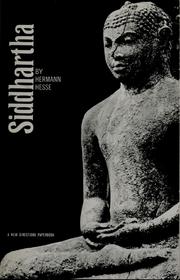 Hermann Hesse · 1922SiddharthaLvl 3Medium pace