

Günter Grass
Germany
Grotesque, exuberant, and teeming with sensory excess: a torrent of invented incident that forces atrocity and comedy to share the same breath.
Grass grew up in the Free City of Danzig, and near the war's end, at seventeen, was drafted into the Waffen-SS, a fact he concealed for sixty years, revealing it only in his 2006 memoir Peeling the Onion, to widespread shock given his stature as West Germany's foremost moral conscience. Captured by American forces, he trained afterward as a sculptor and graphic artist in Düsseldorf and Berlin, and joined Group 47, the influential postwar writers' circle.
The Tin Drum (1959), the first volume of his Danzig Trilogy, made him famous overnight and became the founding text of a new German willingness to confront the Nazi past through grotesque, uncensored imagination. He remained politically active for decades, campaigning for Willy Brandt's Social Democrats and speaking out on reunification and the Iraq War. He won the Nobel Prize in Literature in 1999 and died in Lübeck in 2015.
Their books in the atlas
- 1959
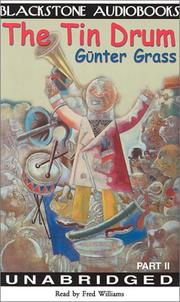 The Tin DrumLvl 8magical realism
 - 1961
 Cat and MouseLvl 6war novel
 - 1963
 Dog YearsLvl 8magical realism
 - 1969
 Local AnaestheticLvl 6political novel
 - 1977
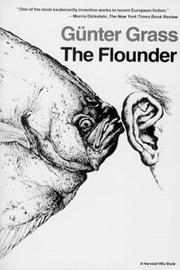 The FlounderLvl 8magical realism
 - 2002
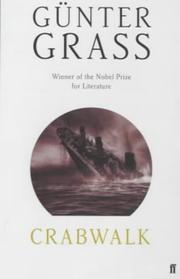 CrabwalkLvl 6historical fiction
Meanwhile, elsewhere
 1926–2016Harper LeeUnited StatesNorth America · United States
 1926–2020Alison LurieUSANorth America · USA1925–2016Intizar HusainPakistanSouth Asia · Pakistan
 1926–2016Mahasweta DeviIndiaSouth Asia · India1923–2015Yaşar KemalTurkeyMiddle East · Turkeyb. 1928William KennedyUnited StatesNorth America · United States
If you like Grass, try
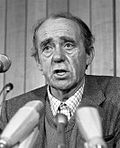 1917–1985Heinrich BöllGermanyshared movement: Gruppe 47 & the German Reckoning · kindred genres: war novel, political novel · both write in German
 b. 1944Bernhard SchlinkGermanyshared movement: Gruppe 47 & the German Reckoning · both write in German · same region & era
 1875–1955Thomas MannGermanyboth write in German · neighboring movements · same region & era
 1878–1957Alfred DöblinGermanyboth write in German · neighboring movements · same region & era
 1877–1962Hermann HesseGermany / Switzerlandboth write in German · neighboring movements · same region & era
 b. 1953Herta MüllerGermany / Romaniakindred genres: war novel, political novel · both write in German · same region & era