
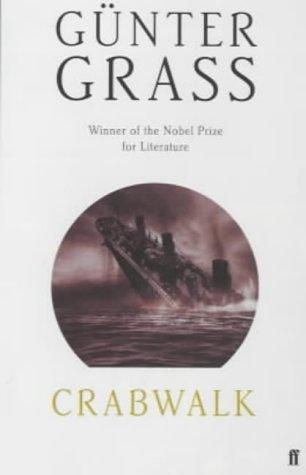
Crabwalk
Günter Grass · 1927–2015 · Germany
Originally Im Krebsgang (German)
Why it matters
A journalist reckons with his mother's survival of the Wilhelm Gustloff's sinking, the deadliest maritime disaster in history, and his own son's drift into neo-Nazi obsession with German wartime suffering. Grass confronts a long taboo subject late in his career.
At a glance
A tight, novella-length structure nonetheless layers three generations of family history.
Deep dive
A journalist born the night his mother's refugee ship sank spends the whole book chasing a catastrophe Germany spent sixty years agreeing not to discuss, until his own son starts talking about it in a much more dangerous way.
Written for readers who have finished the book. No plot recap, and nothing here is safe to read first.
Themes & symbolism
Grass builds the novel around a real catastrophe barely known outside Germany: the Wilhelm Gustloff, a former Nazi cruise liner packed with fleeing refugees and wounded soldiers, was torpedoed by a Soviet submarine in January 1945 and sank with a death toll estimated well above nine thousand, several times the Titanic's, in a matter of minutes. That the disaster went largely unmentioned in German public life for decades is the book's real subject as much as the sinking itself; Grass has his narrator, the journalist Paul Pokriefke, argue that postwar Germany's justified focus on the crimes it committed left no acceptable public language for describing what was also done to it, and the novel's title names its own method for approaching that silence, moving crabwise, sideways and backward, rather than head-on.
Paul's mother Tulla survives the sinking and gives birth to him that same night aboard the rescue vessel, which makes Paul, by his own account, a man literally created by the catastrophe he then spends decades reluctant to write about, only finally doing so under pressure from his estranged son Konrad, who has discovered the story online with none of his father's inherited caution. The novel tracks the same history refracted three times, Tulla's raw survivor's memory, Paul's professional, defensive distance, and Konrad's unmediated, internet-fed obsession, to argue that a story left officially untold doesn't disappear, it just waits for whoever finds it next to tell it with the least context and the most ideology attached.
A War Fought in a Chat Room
Konrad's radicalization plays out largely on a website devoted to Wilhelm Gustloff, the Nazi official the ship was named for, assassinated in Switzerland in 1936 by the Jewish student David Frankfurter, and Konrad, posting under Gustloff's name, finds himself in an increasingly heated argument with a user posting as Frankfurter's defender. Grass stages the entire ideological collision inside a chat window, generations of unresolved history compressed into an anonymous online debate that neither side treats as historical anymore, before Konrad carries the argument out of the forum and into an act of real violence against the boy on the other end of it, a resolution Grass frames as the direct, literal cost of history that's been allowed to fester unaddressed rather than examined.
The last seal: what actually happens, and why it lands the way it does.
The ending, explained
Konrad arranges to meet his online rival, a German boy named Wolfgang Stremplin who had been posting as a defender of David Frankfurter without actually sharing his background, and shoots him in what he later insists to police was a reenactment of the 1936 assassination rather than a hate crime, a distinction the novel refuses to let readers find comforting. Paul, reporting on his own son's trial, recognizes too late that his years of professional avoidance, treating the Gustloff as a story too politically dangerous to tell plainly, left Konrad free to encounter it first through neo-Nazi forums with no competing account at all. Grass ends the novel on Paul's flat admission that the history isn't over and won't be, a refusal of narrative closure that matches the book's whole argument: silence doesn't heal a wound, it just leaves it to be reopened by whoever gets there next with the fewest scruples.
Where to go next
 Günter Grass · 1959The Tin DrumLvl 8Medium pace
 Günter Grass · 1961Cat and MouseLvl 6Medium pace
 Günter Grass · 1963Dog YearsLvl 8Slow burn
 Günter Grass · 1969Local AnaestheticLvl 6Slow burn
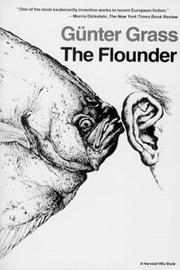 Günter Grass · 1977The FlounderLvl 8Slow burn
 Heinrich Böll · 1974The Lost Honour of Katharina BlumLvl 4Fast paced