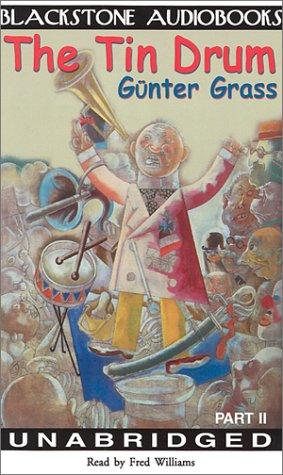
The Tin Drum
Günter Grass · 1927–2015 · Germany
Originally Die Blechtrommel (German)
Why it matters
Oskar Matzerath wills himself to stop growing at three and drums his way through the Nazi era from beneath the tables of respectable Germany. The great grotesque, magical-realist reckoning with German guilt.
At a glance
Grotesque, digressive, symbol-dense prose narrated by a deliberately unreliable dwarf.
Deep dive
Why willing himself to stay three years old for two decades is Oskar's most honest form of both protest and complicity.
Written for readers who have finished the book. No plot recap, and nothing here is safe to read first.
Themes & symbolism
Oskar decides, at three, to stop growing — engineering a fall down the cellar stairs to give the adults a medical excuse — and stays that size through the entire Nazi period, small enough to slip under tables and through crowds while the respectable adults around him accommodate fascism one compromise at a time. His drum, given at that same birthday, lets him disrupt a Nazi rally by drumming a waltz rhythm beneath the marching band until the crowd starts dancing instead of marching — real sabotage, but also a party trick, and Grass never lets the reader settle whether Oskar is a resister or simply a spectator small enough to avoid implication.
Oskar's other power, a scream that shatters glass, is seductive and violent in the same gesture — an aestheticized force that can be turned to mischief or real harm, an uncomfortable echo, in a novel obsessed with Nazism, of propaganda's own power to move a crowd through sound alone. Grass works throughout in a deliberately grotesque, Rabelaisian register rather than a dignified one — his mother Agnes's death, brought on by compulsively eating fish after a horrifyingly literal scene involving eels and a horse's head, is typical: bodily disgust standing in for a grief and guilt the characters can't otherwise process. Oskar himself, telling this story decades later from an institution, never claims innocence or moral clarity about any of it; the grotesque isn't comic relief from the history, it's Grass's argument that dignified tragic form would let both the characters and the reader off too easy.
The Onion Cellar
In the postwar section, Oskar drums at a nightclub where affluent Germans pay to cut onions and cry together, because the war has left them unable to produce authentic grief on their own. It's the novel's bluntest image for a nation that skipped mourning and moved straight to reconstruction — manufactured tears standing in for a reckoning nobody has actually performed.
Danzig's Divided Ground
The novel is anchored in the Free City of Danzig, a contested, ethnically mixed Polish-German enclave between the wars, and Oskar's own parentage is left genuinely ambiguous — Alfred Matzerath or Jan Bronski, his mother's Polish cousin and lover, could equally be his father. That unresolved paternity mirrors the region itself: a place whose German and Polish claims to it were, within Oskar's own lifetime, "settled" first by annexation and then by expulsion, neither settlement remotely just.
The last seal: what actually happens, and why it lands the way it does.
The ending, explained
Oskar's father Alfred, cornered by Soviet troops as Danzig falls, chokes to death trying to swallow his Nazi Party pin to hide the evidence of his membership — killed, with grim irony, by the emblem of his own complicity. At the graveside, Oskar throws away the drum that has defined his arrested childhood and decides to grow again, emerging over the following years into a hunchbacked adult. The novel's frame narrative has this older Oskar telling the whole story from inside a mental institution, where he's been committed amid an unresolved murder investigation whose details, and his actual guilt, the novel leaves deliberately murky.