
Women of Algiers in Their Apartment
Assia Djebar · 1936–2015 · Algeria
Originally Femmes d'Alger dans leur appartement (French) · translated by Marjolijn de Jager
Why it matters
Algerian women speak of confinement, memory, and the war of independence in stories framed by Delacroix's and Picasso's famous paintings of veiled women. Djebar's collection turns the colonial gaze inside out, giving its subjects their own voices at last.
At a glance
Elliptical, non-linear stories move between historical eras and interior monologue without clear signposting.
Deep dive
Djebar answers a painting no French man was ever actually allowed to see into, and finds independence has not done what it promised for the women behind that door.
Written for readers who have finished the book. No plot recap, and nothing here is safe to read first.
Themes & symbolism
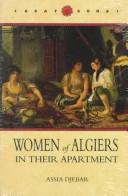
Delacroix painted Women of Algiers in Their Apartment in 1834 from an interior he could only have imagined, since the actual seclusion of Algerian women's quarters kept every French man out, and Picasso reworked the same fantasy in a 1954 series without once questioning its premise. Djebar takes the identical title and does what neither painter could: writes the room from inside it. The reversal is not a simple correction. Djebar's women, decades after the war that won Algeria's independence, are still behind that door, just relocated from a colonizer's fantasy to a nationalist one that prefers them silent and grateful rather than painted and silent.
The title story gathers a group of women in Sarah's Algiers apartment for what starts as an ordinary visit and turns into the collection's clearest case study: Leila, a former resistance fighter reduced to near-silence years after the war, sits at the center of the gathering while the other women talk around her, unable to translate what she carried out of the mountains into anything the new state has a category for. Djebar arranges the whole collection to make the same point structurally, alternating sections titled Today and Yesterday so that stories of the war for independence sit directly beside stories of the peace that followed it, and the two periods start to look less like sequence than repetition: women who ran messages, hid weapons, and died alongside men during the war were handed back, once the fighting stopped, to the same domestic confinement Delacroix painted, minus even the compensation of being looked at.
Forbidden Gaze, Severed Sound
Djebar closes the book with an essay under that title, naming outright what the fiction has been arguing all along: Delacroix's harem was a gaze without a voice attached to it, women seen but never heard, and Djebar's stories exist specifically to give the sound back, even if, as her own title story keeps showing, putting Algerian women's voices on the page is not the same as the new nation actually listening to them.
Writing Toward Algerian Women in French
Djebar wrote in French, the administrative language of the colonizer she had spent her career writing against, because it was the language her own colonial-era schooling had given her fluent access to, and the collection never resolves the discomfort of that choice: French lets her stories reach readers Arabic alone might not, while repeating, on the level of language itself, the same one-way transaction the book keeps accusing Delacroix's painting of, a woman's interior life made legible only by passing it through the outsider's tongue first.
Where to go next
 Assia Djebar · 1985Fantasia: An Algerian CavalcadeLvl 8Slow burn
 Mariama Bâ · 1979So Long a LetterLvl 3Slow burn
 Bessie Head · 1973A Question of PowerLvl 8Slow burn
 Tayeb Salih · 1966Season of Migration to the NorthLvl 7Slow burn
 David Diop · 2018At Night All Blood Is BlackLvl 5Fast paced
 Ayi Kwei Armah · 1968The Beautyful Ones Are Not Yet BornLvl 6Slow burn