
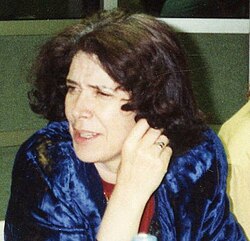
Assia Djebar
Algeria
Fragmented and polyphonic, memoir and history and testimony interleaved without transition: French sentences straining to carry voices it once silenced.
Djebar was born Fatima-Zohra Imalayène in colonial Algeria and became, in 1955, the first Algerian woman admitted to France's elite École Normale Supérieure. She left her studies to support the Algerian independence movement during the war against France, then turned to writing and, later, filmmaking as ways of recovering a history from which colonized women had been doubly silenced, by empire and by patriarchy alike.
Fantasia: An Algerian Cavalcade, published in 1985, wove her own girlhood together with archival accounts of the French conquest and interviews with women who had fought in the war of independence, all rendered in the French language she treated as both wound and tool. She taught for years in Algeria and the United States, was elected to the Académie française in 2005 (its first writer from the Maghreb) and died in Paris in 2015.
Their books in the atlas
- 1980
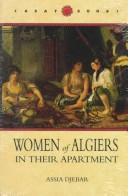 Women of Algiers in Their ApartmentLvl 6short story collection
 - 1985
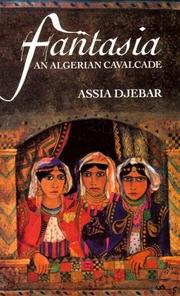 Fantasia: An Algerian CavalcadeLvl 8autobiographical fiction
Meanwhile, elsewhere
 1932–2016Umberto EcoItalyWestern Europe · Italy
 1927–2015Günter GrassGermanyWestern Europe · Germany
 b. 1933Cees NooteboomNetherlandsWestern Europe · Netherlands
 1936–2023A. S. ByattEnglandWestern Europe · England1928–2016William TrevorIrelandWestern Europe · Ireland
 1933–2017David StoreyEnglandWestern Europe · England
If you like Djebar, try
 1929–1981Mariama BâSenegalshared movement: Postcolonial Literatures · kindred genres: colonial & postcolonial, psychological novel · both write in French
 1937–1986Bessie HeadSouth Africa / Botswanashared movement: Postcolonial Literatures · kindred genres: colonial & postcolonial, autobiographical fiction · same region & era
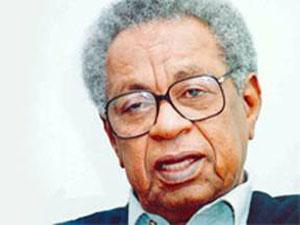 1929–2009Tayeb SalihSudanshared movement: Postcolonial Literatures · kindred genres: colonial & postcolonial, psychological novel · same region & era
 b. 1966David DiopFranceshared movement: Postcolonial Literatures · kindred genres: colonial & postcolonial · both write in French
 1939–2023Ayi Kwei ArmahGhanakindred genres: colonial & postcolonial, historical fiction · neighboring movements · same region & era
 1913–1960Albert CamusAlgeria / Francekindred genres: psychological novel, autobiographical fiction · both write in French · neighboring movements