
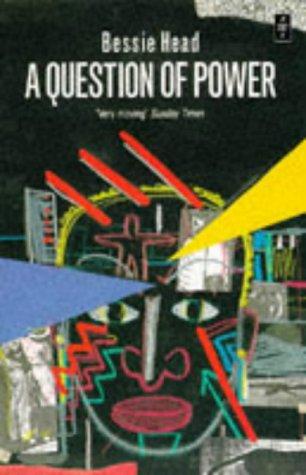
A Question of Power
Bessie Head · 1937–1986 · South Africa / Botswana
Why it matters
A mixed-race exile in a Botswana village descends into mental collapse, wrestling visions of good and evil. Head's most personal novel renders race, madness, and the search for belonging with raw, visionary force.
At a glance
Fevered, hallucinatory interiority tracks a breakdown with little stable narrative ground.
Deep dive
Elizabeth's exile from South Africa to a small Botswana village turns into a war fought almost entirely inside her own head, staged between two men who may not exist outside it.
Written for readers who have finished the book. No plot recap, and nothing here is safe to read first.
Themes & symbolism
Elizabeth arrives in the fictional Botswana village of Motabeng as a refugee from apartheid South Africa, carrying a classification, 'Coloured,' that has already told her exactly how much she is allowed to be before she has done anything to earn or refuse it. Head, who lived through a version of this exile herself, doesn't narrate the breakdown that follows from a safe clinical distance; the novel drops the reader directly inside Elizabeth's psychosis, where two men, Sello and Dan, arrive not as memories or metaphors clearly labeled as such but as fully present antagonists who argue, torment, and instruct her with a reality the prose never undercuts.
Sello appears in the novel as a shifting, almost saintly figure, one version of him a real, unremarkable man living quietly in Motabeng, other versions cosmic teachers offering Elizabeth visions of spiritual power and its abuses; Dan, by contrast, escalates into a purely sadistic presence, parading a procession of sexual humiliations designed specifically to break Elizabeth's sense of her own worth. Head is explicit that this isn't only personal collapse: the psychic violence Elizabeth suffers replays, almost point for point, the logic of the racial hierarchy she fled, a system that also worked by insisting some people's inner lives simply mattered less, and the novel refuses to let the reader treat her hallucinations as separable from the political history that produced them.
Running underneath the visions, and eventually outlasting them, is the Motabeng cooperative's actual gardening project, communal, unglamorous, physical work growing vegetables with neighbors who ask nothing metaphysical of Elizabeth at all. Head, who worked on a real development farm in Botswana while writing much of this material, treats the garden as the novel's counterweight to Sello and Dan's cosmic theater: ordinary labor and ordinary friendship, offered without any claim to explain or redeem what Elizabeth has been through, turn out to be the only forces in the book strong enough to compete with it.
Apartheid Re-Fought as Psychology
Head never states outright that Dan is meant to be South African racial ideology wearing a face, but the pattern is hard to miss: his cruelty operates by ranking, sorting Elizabeth against an endless parade of other women, insisting on hierarchies of worth that mirror, with uncomfortable precision, a state built entirely on racial ranking. Reading the novel as allegory risks flattening what is also a genuinely harrowing account of psychosis, and Head resists letting either reading cancel the other out, insisting the political and the psychological were never actually separate battles for someone who grew up classified before she was old enough to argue about it.
The last seal: what actually happens, and why it lands the way it does.
The ending, explained
Elizabeth's breakdown reaches its worst point in scenes of total disintegration, days spent unable to distinguish Dan's taunts from her own thoughts, before the balance in the novel begins, gradually and without any single dramatic turn, to shift. Sello's more benevolent aspect and the steady, undemanding presence of friends in Motabeng, along with the garden's daily physical claims on her attention, pull Elizabeth back from a collapse the novel has never pretended was merely metaphorical. She does not emerge cured in any tidy sense; Head ends the book with Elizabeth simply able to function again, folded back into the ordinary rhythms of communal work and neighborliness, a recovery measured in small, repeated, unglamorous acts of staying present rather than in any single moment of triumph over Dan.
Where to go next
 Bessie Head · 1968When Rain Clouds GatherLvl 4Medium pace
 Tayeb Salih · 1966Season of Migration to the NorthLvl 7Slow burn
 Assia Djebar · 1985Fantasia: An Algerian CavalcadeLvl 8Slow burn
 Nadine Gordimer · 1981July's PeopleLvl 7Slow burn
 Nuruddin Farah · 1986MapsLvl 8Slow burn
 Ama Ata Aidoo · 1991ChangesLvl 3Medium pace