
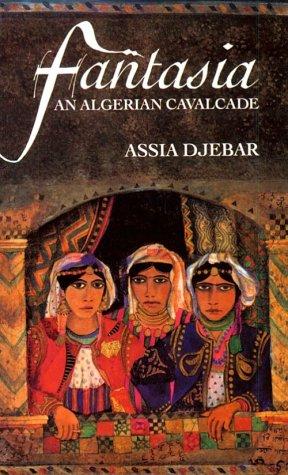
Fantasia: An Algerian Cavalcade
Assia Djebar · 1936–2015 · Algeria
Originally L'Amour, la fantasia (French) · translated by Dorothy S. Blair
Why it matters
Djebar's girlhood, the French conquest, and the war of independence woven into a polyphonic history of Algerian women. Written in the colonizer's French to recover voices that colonialism and patriarchy both silenced.
At a glance
Fragmented, essayistic weave of memoir, history, and testimony defies linear reading.
Deep dive
Djebar sets her own girlhood, told partly in French, partly against French, alongside the French army's own written record of conquering Algeria, and lets the two archives argue with each other.
Written for readers who have finished the book. No plot recap, and nothing here is safe to read first.
Themes & symbolism
Djebar builds the book from two archives braided together rather than blended: autobiographical chapters tracing her own girlhood, entering a French colonial school as one of the first Algerian Muslim girls in her town to do so, learning a language that unlocked movement and reading while cutting her off from the seclusion, and the intimacy, of the Arabic-speaking women in her own family; and historical chapters built almost entirely from the French military's own letters, memoirs, and official reports documenting the 1830 conquest and the decades of pacification that followed. Neither strand functions as background to the other. Djebar wants the reader holding both at once, a single life and a full-scale invasion, refusing the reader the comfort of treating one as the real subject and the other as context.
The book's hardest chapter reconstructs the June 1845 killing of hundreds of Algerians, among them members of Djebar's own Berkani tribe, who took shelter in caves in the Dahra mountains while fleeing French forces under Colonel Pelissier, ordered to set fires at the cave mouths rather than draw his men into direct combat. Djebar makes a point of naming her source: Pelissier's own official report, the only detailed record of the massacre to survive, since the oral memory passed down to her carried the event without the specifics a written account preserved. Working entirely from the conqueror's paperwork to recover her own family's dead is the book's method distilled into a single chapter, history reclaimed not by inventing a counter-archive but by reading the existing one against its author's intentions.
Language as Both Wound and Weapon
Djebar writes about her own French-language education as a genuine liberation, the language that let her leave the house, attend school, eventually become a novelist, and as an act of estrangement in the same breath, a veil she puts on that separates her from the Arabic her female relatives spoke and from the physical seclusion that language enforced along with it. Composing a book about French colonial violence in the colonizer's own language is not a contradiction the book resolves so much as one it keeps deliberately visible on every page, refusing to pretend that reclaiming a history and writing in the tongue of its perpetrators can ever be a fully clean act.
The Cry the Archive Never Transcribed
French chroniclers repeatedly note the sound of Algerian women's ululations rising during battles and sieges, the same untranslated cry logged again and again as background noise rather than speech worth recording. Djebar treats that gap as her book's real assignment: not simply adding Algerian voices to a French record but restoring the specific women whose cries were heard and never transcribed, closing the book's later sections with oral testimony gathered directly from women who lived through the War of Independence, letting a different kind of archive, spoken, collective, finally answer for itself.
Where to go next
 Assia Djebar · 1980Women of Algiers in Their ApartmentLvl 6Slow burn
 Mariama Bâ · 1979So Long a LetterLvl 3Slow burn
 Bessie Head · 1973A Question of PowerLvl 8Slow burn
 Tayeb Salih · 1966Season of Migration to the NorthLvl 7Slow burn
 David Diop · 2018At Night All Blood Is BlackLvl 5Fast paced
 Ayi Kwei Armah · 1968The Beautyful Ones Are Not Yet BornLvl 6Slow burn