
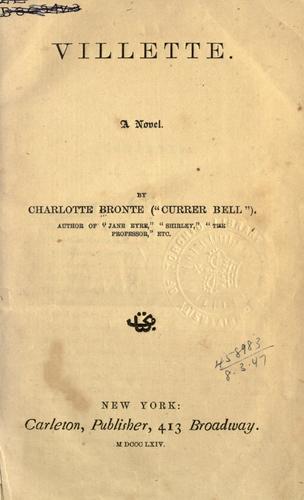
Villette
Charlotte Brontë · 1816–1855 · England
Why it matters
Brontë's darker, stranger masterpiece: a solitary teacher in a foreign city, narrating her own repression with unreliable, smoldering control. George Eliot thought it surpassed Jane Eyre; many now agree.
At a glance
A deliberately unreliable narrator withholds and distorts key facts throughout.
Deep dive
A solitary English teacher in a fictional Belgian city narrates her own repression so carefully that she hides things even from the reader, and Brontë's strangest novel only lets you notice the withholding in hindsight.
Written for readers who have finished the book. No plot recap, and nothing here is safe to read first.
Themes & symbolism
Lucy Snowe recognizes Dr. John as Graham Bretton, a childhood acquaintance, almost as soon as she meets him in Villette, but deliberately withholds that recognition from the reader for several chapters, revealing it only after the fact; the concealment isn't a failure of narration but a demonstration of it, a narrator performing precisely the self-effacement the novel is otherwise describing from the outside.
The hooded, spectral nun Lucy repeatedly glimpses around the school is built up with genuine gothic dread across many chapters before Brontë gives it an entirely mundane explanation, a student's lover in disguise using the legend to sneak in for secret meetings, deflating the supernatural exactly where a lesser novel would cash it in. The dread doesn't disappear with the explanation, it simply relocates, from an external haunting to Lucy's own unreadable interior.
M. Paul Emanuel, volatile and controlling but the first person in the novel to actually notice Lucy rather than overlook her the way nearly everyone else treats her, as furniture, gives the book its real romantic center through intellectual sparring rather than convention, set pointedly against the more outwardly appealing pairing of Dr. John and the shallow, beautiful Ginevra Fanshawe. Brontë's argument, quietly insisted on rather than stated, is that being genuinely seen matters more than being desired.
Lucy's own crisis of faith, arriving in a Catholic city as a committed Protestant and eventually confessing her loneliness to a priest purely out of desperation for someone, anyone, to talk to, gives the novel a religious tension Brontë never fully resolves either: Lucy remains suspicious of Catholic ritual throughout, yet the confession scene is written with a sincerity that undercuts her own stated skepticism, one more instance of a narrator whose professed convictions and actual behavior quietly diverge.
A Happy Ending Her Father Wouldn't Let Her Write
Brontë's own letters record that her father Patrick wanted a conventional marriage ending and that she compromised by writing the novel's final storm passage ambiguously rather than stating M. Paul's fate outright, a concession that still reads, to nearly every attentive reader, as tragedy wearing the thinnest possible disguise of technical uncertainty.
The Novel George Eliot Preferred to Jane Eyre
George Eliot wrote privately that this book surpassed Jane Eyre, drawn to exactly the qualities that made it a harder sell to Brontë's own publisher: a heroine who is plain rather than magnetic, a narrator whose reliability the reader has to keep actively questioning rather than simply trusting, and a foreign setting stripped of the earlier novel's more conventional gothic scaffolding. The novel's slower critical rehabilitation over the following century has largely vindicated that early judgment, even as Jane Eyre kept the wider popular readership Villette never quite managed to win away from it.
The last seal: what actually happens, and why it lands the way it does.
The ending, explained
M. Paul, having proposed to Lucy and arranged for her to run her own school, departs on a three-year business voyage to the West Indies with his return by ship expected on a specific date; Brontë's final paragraph describes a ferocious storm that wrecked vessels along that same route around the time he was due back, then pivots immediately to briskly summarizing every minor character's happy fate, never directly confirming whether his ship survived. The omission, confirmed in Brontë's own correspondence as a concession to her father's wishes, leaves Lucy's own flat, guarded closing tone offering no comfort in either direction, a deliberate technicality standing in for what most readers correctly take as loss.
Where to go next
 Charlotte Brontë · 1847Jane EyreLvl 4Medium pace
 Emily Brontë · 1847Wuthering HeightsLvl 6Medium pace
 George Eliot · 1872MiddlemarchLvl 6Slow burn
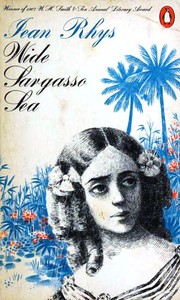 Jean Rhys · 1966Wide Sargasso SeaLvl 6Slow burn
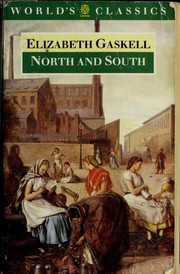 Elizabeth Gaskell · 1855North and SouthLvl 4Medium pace
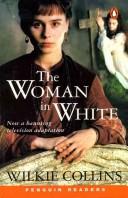 Wilkie Collins · 1859The Woman in WhiteLvl 4Fast paced