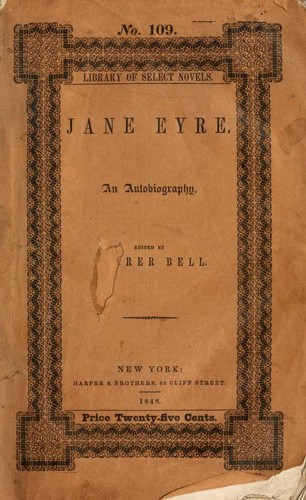
Jane Eyre
Charlotte Brontë · 1816–1855 · England
Why it matters
'Reader, I married him': the first great novel where a poor, plain woman's inner voice commands the story. Passion, principle, and the madwoman in the attic: Victorian fiction's most electric first person.
At a glance
Clear first-person voice, though Victorian diction and gothic plotting add texture.
Deep dive
How Jane's insistence on equality reshapes the marriage plot from the inside, and what the Bertha Mason subplot is doing underneath the gothic machinery.
Written for readers who have finished the book. No plot recap, and nothing here is safe to read first.
Themes & symbolism
Jane's first-person voice is the novel's real innovation: a poor, plain, powerless woman narrating her own worth and desire without apology, addressing "Reader" directly as an equal rather than a supplicant asking to be liked. That voice is what makes the marriage plot legible as something other than a rescue fantasy — Jane refuses Rochester as his mistress and refuses St. John Rivers's loveless missionary marriage for the identical reason: she won't accept a union that isn't between equals, whether the inequality is moral compromise or emotional erasure.
Bertha Mason is both the engine of the novel's gothic suspense and its most uncomfortable subtext — Rochester's Caribbean fortune and his Creole first wife, confined in the attic and described in dehumanizing, animalistic terms, smuggle imperial wealth and racial othering into the plot's most convenient obstacle. Her fire is what finally levels the power the novel has been building toward: Rochester loses Thornfield, his sight, and his hand, and only then can Jane return to him not as a suppliant in love but as an equal, with her own inheritance and her own free choice.
Bertha Mason's Afterlife
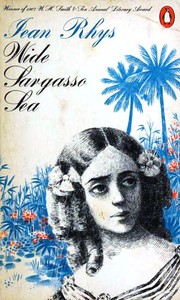
Later readers, most famously Jean Rhys in Wide Sargasso Sea, pushed back hard on the novel's treatment of Bertha as pure gothic obstacle — a mad Creole heiress whose interiority the book never grants her, unlike every other character Jane encounters. That critique doesn't require abandoning Brontë's novel so much as reading it with both eyes open: Jane's liberation is real and hard-won, and it's also purchased, in part, by a woman the text treats as scarcely human. The two readings coexist rather than cancel each other out, which is part of why the novel keeps generating new criticism a century and a half on. Rhys's 1966 novel gives Bertha a name, Antoinette, and a full account of her own Jamaican girlhood and marriage, effectively arguing that Brontë's classic requires a companion volume to be read responsibly at all — a rare case of a prequel changing how the original is taught rather than merely trading on its fame.
The last seal: what actually happens, and why it lands the way it does.
The ending, explained
Jane returns to find Thornfield burned by Bertha, who dies in the fire; Rochester, blinded and missing a hand from trying to save the household, including Bertha, is now dependent rather than her social and financial superior. Jane, freshly wealthy from her uncle's inheritance and free of St. John's proposal, chooses to marry him — "Reader, I married him," phrasing that makes her, grammatically, the one who acts. The marriage reads as one of equals only because Rochester has been leveled and Jane has arrived independent; his partial recovery of sight in one eye by the close, enough to see their son, softens the maiming without undoing the redistribution of power that made the ending possible.