
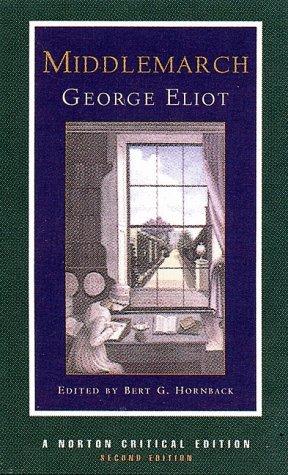
Middlemarch
George Eliot · 1819–1880 · England
Why it matters
Routinely named the greatest English novel: a whole provincial town, and in Dorothea and Lydgate the most sympathetic study ever written of high intentions meeting ordinary life. Its final sentence about 'unhistoric acts' is the realist credo entire.
At a glance
Large interwoven cast and sustained authorial commentary across a very long narrative.
Deep dive
Why Lydgate's marriage, not Dorothea's, is the novel's real tragedy — and what the 'Key to All Mythologies' is quietly a joke about.
Written for readers who have finished the book. No plot recap, and nothing here is safe to read first.
Themes & symbolism
Eliot's narrator keeps returning to the figure of a web: pull one thread in Middlemarch and the whole town shudders. The two marriage plots are the proof. Dorothea marries Casaubon to borrow a purpose bigger than the one available to an intelligent woman with no outlet for her intelligence, and what she gets instead, almost as soon as the honeymoon starts, is a small, frightened, jealous man guarding a Key to All Mythologies that was already superseded scholarship before she agreed to serve it. Lydgate marries Rosamond for her beauty and her seeming pliability, and discovers only after the wedding that the pliability was never real — it was her will wearing a smile, and it will cost him his laboratory, his reputation, and eventually his idealism itself. Both marriages teach the same lesson at different volumes: other people are not satellites of your ambition, they have a centre of self every bit as vivid to them as yours is to you, and marrying past that fact is how the novel's two brightest minds get quietly ruined.
The Bulstrode plot works the web metaphor from the other direction — a private, decades-old sin, the concealment around a stolen fortune, surfaces through the blackmailer Raffles and reaches out to touch Lydgate's reputation through nothing but proximity and an ill-timed loan. That's Eliot's realism doing its real work: not that character is destiny in some clean moral-fable sense, but that in a town this interconnected, other people's history becomes your consequence whether you deserve it or not.
Dorothea and Lydgate: the same lesson, two different endings
Eliot doesn't reward the character who follows the marriage plot's rules more carefully. Dorothea's disillusionment leads somewhere: she chooses Ladislaw and clarity over Casaubon's fortune, ending diminished in scale from her girlhood ambitions but resolved in spirit. Lydgate's disillusionment leads nowhere at all — he never leaves Rosamond, never recovers the scientific ambition the town ground down between her vanity and his own debts, and calls his own life a failure by the time he dies young and comfortably kept. His is the sadder trajectory precisely because nothing redeems it, while Dorothea's smaller-than-hoped-for life at least has love and clear sight inside it.
The last seal: what actually happens, and why it lands the way it does.
The ending, explained
Casaubon's will contains a vindictive codicil disinheriting Dorothea if she marries Ladislaw, an attempt to govern her from beyond the grave; she marries him anyway, forfeiting the fortune, choosing feeling and clarity over security and status. It's a quieter ending than her girlhood ambitions imagined — no reforming institutions, no historic act with her name on it — and Eliot's Finale insists that's the point: the world is better than it would have been because of unhistoric acts by people like her, whose full effect can never be counted up. Lydgate gets no such consolation. He never leaves Rosamond, never recovers his ambition, dies young and prosperous and, by his own reckoning, a failure — proof that Eliot's realism extends to letting a good man's story simply not resolve.
Where to go next
 George Eliot · 1860The Mill on the FlossLvl 5Medium pace
 Thomas Hardy · 1891Tess of the d'UrbervillesLvl 4Medium pace
 Jane Austen · 1813Pride and PrejudiceLvl 3Medium pace
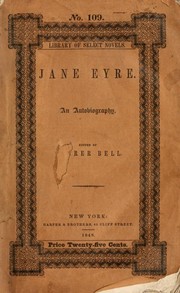 Charlotte Brontë · 1847Jane EyreLvl 4Medium pace
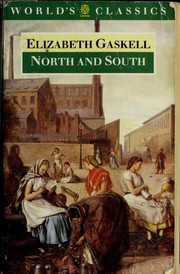 Elizabeth Gaskell · 1855North and SouthLvl 4Medium pace
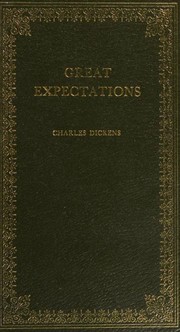 Charles Dickens · 1861Great ExpectationsLvl 4Medium pace