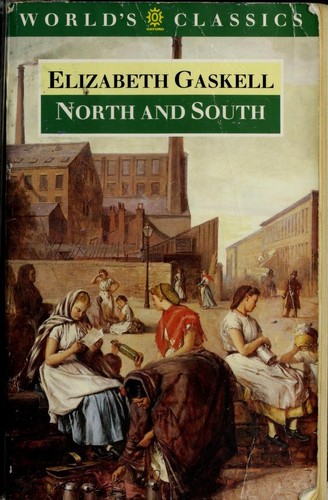
North and South
Elizabeth Gaskell · 1810–1865 · England
Why it matters
A genteel southern woman relocates to an industrial mill town and finds her assumptions about class and labor upended. Gaskell weighs striking workers against mill owners with unusual fairness to both.
At a glance
Accessible Victorian realism with clearly drawn social argument.
Deep dive
A vicar's daughter moves from the genteel south to a smoke-choked mill town certain she already knows who the villains are, and Gaskell spends the whole novel making her unlearn it.
Written for readers who have finished the book. No plot recap, and nothing here is safe to read first.
Themes & symbolism
Margaret Hale's relocation from rural Helstone to industrial Milton is staged as a genuine, hard-won education rather than a simple contrast of good countryside against bad factory town: her early instinctive class prejudice against 'trade,' and her equally instinctive sympathy for the striking mill workers over their employer John Thornton, are both complicated across the novel as she comes to know individual millworkers like the dying Bessy Higgins and her union-organizing father Nicholas, and comes to understand Thornton's own position — a self-made man risking ruin to honor debts his father left, genuinely wrestling with what he owes his workers even as he defends a strict master's authority.
Gaskell refuses to let either side of the strike plot simply win the argument: the workers' grievances (starvation wages, brutal working conditions, Thornton's initial cold refusal to explain his reasoning to his own hands) are given full weight, especially through Nicholas Higgins's principled union organizing and Bessy's suffering from cotton-dust-damaged lungs, but so is Thornton's case that a mill can't survive, and can't employ anyone at all, if it's run by sentiment rather than sound calculation during a market downturn — the novel's structural achievement is building genuine intellectual and moral force into both a paternalist-capitalist and a collectivist-labor position without simply crowning one correct.
Margaret's central lie to protect her fugitive brother Frederick — claiming, when questioned by police after a station-platform scuffle, that she wasn't present at all — is a serious violation of the strict truthfulness the novel has established as her core value, and Gaskell uses Thornton's discovery of the lie (he witnessed the scene and assumes, wrongly, that the man with her was a lover) as the mechanism by which Margaret has to confront her own fallibility just as thoroughly as she's spent the novel diagnosing Thornton's; the romance plot only resolves once both characters have been forced to revise a confident first judgment of the other's character.
A Novel Written Between Strikes, Serialized Under Dickens
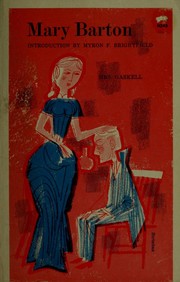
Gaskell serialized North and South in Charles Dickens's magazine Household Words in 1854–55, under editorial pressure from Dickens himself to compress and speed up the plot, changes she resented enough to restore much of the original pacing and detail for the subsequent book edition. She drew directly on her own life in industrial Manchester (thinly fictionalized as Milton) and on real labor unrest of the period, aiming, as she'd already attempted in her earlier Mary Barton, to render both sides of the era's bitter capital-labor conflict with equal seriousness — an ambition that drew criticism from industrialists who felt Mary Barton had been too sympathetic to strikers, criticism North and South's more evenly weighted treatment of Thornton was in part a deliberate response to.
The last seal: what actually happens, and why it lands the way it does.
The ending, explained
After her father's death leaves her alone and eventually the unexpected heir, through her godfather, to a substantial fortune, Margaret returns to London a changed woman, no longer either the sheltered southern girl of the opening chapters or the instinctively hostile critic of industry she became in Milton. Thornton, meanwhile, having refused financial speculation that might have saved his mill and lost it instead through an honest but ultimately failed gamble during a market crisis, has been reduced to the position of a manager rather than an owner — a reversal that strips away the power imbalance that shadowed their earlier scenes together. Margaret, now financially independent, offers to invest her inherited capital in Thornton's mill as a straightforward business arrangement, a proposal that turns into a marriage proposal once both finally say plainly what their years of misjudging each other had kept them from admitting; the novel closes their romance and its industrial argument on the same note, a partnership of genuine equals rather than the rescue-narrative or capitulation either character's earlier position would have predicted.