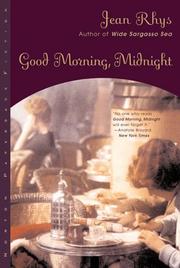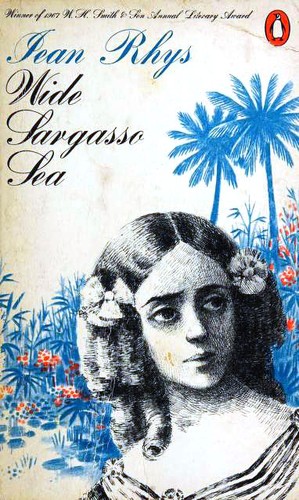
Wide Sargasso Sea
Jean Rhys · 1890–1979 · United Kingdom / Dominica
Why it matters
The madwoman in Jane Eyre's attic given her own voice: a Caribbean Creole heiress undone by empire, men, and the man who renames her Bertha. The prequel as act of restitution, and a masterpiece of postcolonial reclamation.
At a glance
Fractured, multi-voiced narration and dreamlike chronology unsettle a short book.
Deep dive
Jean Rhys gives Brontë's 'madwoman in the attic' a childhood, a homeland, and a name of her own — and makes you watch, from the inside, exactly how a woman gets talked out of all three.
Written for readers who have finished the book. No plot recap, and nothing here is safe to read first.
Themes & symbolism
Rhys writes Antoinette Cosway as a Creole heiress caught between worlds that both reject her: too white and privileged to be accepted by the recently emancipated Black Jamaicans who burn her family's estate at Coulibri, too colonial and 'other' to be fully accepted by the English husband who arrives to marry her for her fortune. That double exclusion, established in the novel's first section through Antoinette's own increasingly fragile first-person voice, is the psychological ground the rest of the novel builds on — her madness, when it eventually comes, is framed less as an inherent flaw than as the accumulated cost of belonging nowhere.
The unnamed English husband (never called Rochester in the text, though every reader understands who he is) narrates the novel's long middle section, and Rhys uses his voice to dramatize colonization at the scale of a single marriage: he renames Antoinette 'Bertha' against her will, imposes English categories of sanity and propriety on a Caribbean woman and landscape he finds simultaneously alluring and unreadable, and grows to resent her precisely because she won't resolve into the legible Englishwoman he expected to purchase along with her dowry. His decision to remove her to cold, gray England — physically severing her from the only climate and light in which she's ever made sense to herself — is the novel's clearest act of violence, performed with the calm self-justification of a man who believes he's protecting his own reputation rather than destroying a person.
Christophine, the Martinican obeah woman and the novel's only character who diagnoses the marriage's cruelty in plain terms, offers Antoinette a alternate frame of power and independence that the plot ultimately can't let her use — she warns Antoinette against the marriage, tries to intervene, and is dismissed and threatened with the law by the husband, a reminder that the novel's postcolonial critique operates on multiple axes at once, gender and race and class all compounding rather than any single explanation sufficing for what happens to Antoinette.
Writing Backward Into Jane Eyre
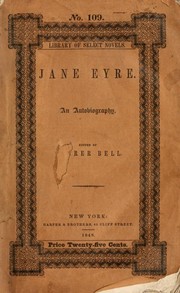
Rhys, herself a white Creole born in Dominica, wrote the novel explicitly as a corrective to Charlotte Brontë's Jane Eyre, whose Bertha Mason exists only as a locked-away, barely human obstacle to Jane and Rochester's romance — 'she seemed such a poor ghost,' Rhys wrote of Brontë's character, 'that I felt I had to write her a life.' The novel doesn't contradict Jane Eyre's events so much as supply the missing colonial and psychological history behind them, reframing the earlier novel's Gothic madwoman as the product of a specific, traceable sequence of dispossession rather than a given fact of nature — one of the most influential acts of literary 'writing back' in the postcolonial canon.
The last seal: what actually happens, and why it lands the way it does.
The ending, explained
Locked in Thornfield's attic under the drunken Grace Poole's care, Antoinette has lost track of time and her own name, retaining only fragments of memory and a Caribbean red dress that still smells, she thinks, of the sun she's been taken from. In the novel's final pages she dreams — the last and most detailed of several dreams threaded through the book — of taking a candle, wandering the house, and setting the curtains alight before walking onto the battlements as flames spread beneath her; she wakes with sudden clarity about what she has to do, though Rhys never shows her doing it, ending instead on Antoinette leaving her room, candle in hand. The device is deliberate: since Jane Eyre already tells readers Bertha burns Thornfield and dies leaping from the roof, Rhys need only narrate the moment Antoinette recognizes and chooses that fate — turning a madwoman's senseless destruction into this novel's act of terrible, deliberate self-determination.