

The Woman in White
Wilkie Collins · 1824–1889 · England
Why it matters
A mysterious woman in white on a moonlit road sets off a plot of stolen identity, asylum confinement, and inheritance fraud. Widely credited as the first great English sensation novel and a founding text of detective fiction.
At a glance
Multiple narrators to track, but each voice is clear and propulsive.
Deep dive
A ghostly figure on a moonlit road turns out to be the key to an inheritance fraud so elaborate it required inventing detective fiction's methods to untangle.
Written for readers who have finished the book. No plot recap, and nothing here is safe to read first.
Themes & symbolism
Collins structures the entire novel as a legal case being assembled from multiple witness testimonies — Walter Hartright, Marian Halcombe, Mr. Fairlie, a lawyer, servants, even Count Fosco himself all narrate their own sections in their own voice — a device presented in-story as literally building a case fit for a courtroom, since the plot turns on documentary and testimonial proof (a marriage register, a train timetable, a forged death certificate) mattering more than any single person's word. The structure makes The Woman in White a direct ancestor of both the detective novel and the legal thriller: truth here isn't intuited by a genius detective but painstakingly cross-referenced out of ordinary people's overlapping, sometimes unreliable accounts.
Marian Halcombe, plain, unmarried, and repeatedly described in terms that emphasize her supposedly masculine intelligence and courage, is the novel's real engine of detection and resistance — she spies on Fosco and Glyde from a roof in the rain, deciphers their plot, and outmaneuvers them intellectually in ways the nominal romantic hero Walter Hartright can't match for most of the book — and Collins's willingness to make his most capable character a woman explicitly denied conventional beauty and marriageability is itself a quiet argument against a genre and a society that mostly rewarded women for prettiness and passivity rather than competence.
Sir Percival Glyde's fraud hinges on a secret about his own illegitimate birth (he was never legally entitled to his baronetcy) and Fosco's scheme hinges on exploiting the physical resemblance between his wife's niece Laura and the fragile, similarly-resembling Anne Catherick — both plots depend on identity itself being falsifiable through paperwork, resemblance, and institutional credulity, whether that means a forged parish register or a private asylum willing to certify the wrong woman as insane on a husband's say-so. Collins's sensation-novel plotting keeps returning to the same anxiety: in a bureaucratic, document-based society, identity is only ever as secure as the paper trail behind it, which makes it terrifyingly easy for a confident, well-connected criminal to simply rewrite who someone officially is.
Count Fosco, the Villain Everyone Remembers
Count Fosco — enormously fat, devoted to his pet mice and canaries, unfailingly charming, and intellectually contemptuous of the 'weak' English criminals he considers himself superior to — is routinely singled out as Victorian fiction's most purely enjoyable villain precisely because Collins refuses to make him simply monstrous: he's genuinely witty, capable of real (if entirely self-serving) admiration for Marian's intelligence, and narrates his own section of the novel with an unrepentant, almost proud clarity about his own criminality that later sensation and detective fiction villains would spend decades trying to imitate. T. S. Eliot named the novel among his favorites specifically for Fosco, and the character's blend of menace and charisma set a template — the urbane, intellectually superior criminal mastermind — that runs in a direct line to figures like Moriarty a generation later.
The last seal: what actually happens, and why it lands the way it does.
The ending, explained
Walter Hartright, having married Laura after her supposed death (actually the death of the similarly ill Anne Catherick, substituted into Laura's identity so Glyde and Fosco could seize her fortune), spends the final section reconstructing the fraud through documentary proof — discovering the register Glyde altered to hide his illegitimacy, which leads to Glyde's death in a fire he sets trying to destroy that evidence himself. Fosco, protected by his connections to a shadowy Italian secret society he once betrayed, is tracked down and assassinated by that society's agent in Paris, his body identified by Hartright in the morgue — justice arriving not through the easily-gamed English legal system but an extralegal reckoning. With Laura's identity restored, she and Walter marry properly, and Marian, unmarried but fully integrated into their household, closes the narrative as its true guardian, the family explicitly held together by her rather than the technical romantic pairing.
Where to go next
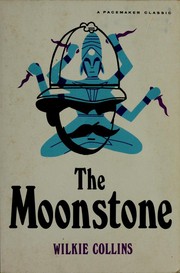 Wilkie Collins · 1868The MoonstoneLvl 4Fast paced
 Charles Dickens · 1861Great ExpectationsLvl 4Medium pace
 Charlotte Brontë · 1847Jane EyreLvl 4Medium pace
 Emily Brontë · 1847Wuthering HeightsLvl 6Medium pace
 Bram Stoker · 1897DraculaLvl 4Fast paced
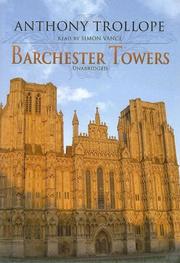 Anthony Trollope · 1857Barchester TowersLvl 4Medium pace