
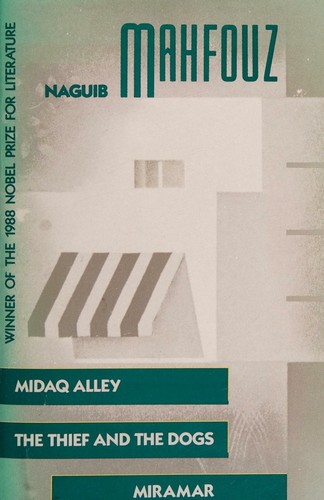
The Thief and the Dogs
Naguib Mahfouz · 1911–2006 · Egypt
Originally Al-Liss wal-Kilab (Arabic) · translated by Trevor Le Gassick and M. M. Badawi
Why it matters
A thief walks out of prison into a Cairo that has already replaced him: his wife remarried to the informer who turned him in, his old comrades' ideals sold out for respectability. Mahfouz's shortest, most modern novel, an interior monologue driving one man's reckoning with everyone who betrayed him.
At a glance
Compressed, associative stream-of-consciousness narration tracks a mind unraveling toward violence.
Deep dive
Fresh out of prison and set on revenge against the wife and the friend who put him there, Said Mahran discovers that the ideology he once trusted to make sense of his anger has quietly changed sides while he was locked up.
Written for readers who have finished the book. No plot recap, and nothing here is safe to read first.
Themes & symbolism
Said Mahran emerges from four years in prison to find his wife Nabawiyya remarried to Ilish Sidra, the friend who betrayed him to the police, and his young daughter Sana no longer willing to recognize him, and Mahfouz builds Said's entire revenge plot around a man discovering that the world he is trying to punish has simply moved on without pausing to notice his absence. Said's socialist convictions, absorbed years earlier from his mentor Rauf Ilwan, framed his original thefts as a kind of class justice, taking from the rich what the system denied the poor, and prison has done nothing to soften that self-image even as everything around him has changed.
Rauf Ilwan himself has become exactly the kind of comfortable, compromised establishment figure his younger self despised, a newspaper editor now more interested in protecting his own property than in any theory of redistribution, and his refusal to help Said, offering charity instead of the solidarity Said expected, is the novel's bluntest statement that the ideology Said still lives by has been abandoned by the very man who taught it to him. Mahfouz uses the mismatch, a man frozen in an old conviction confronting the people who have all quietly outgrown it, as the engine of Said's escalating, increasingly indiscriminate violence, since every rebuff only confirms for Said that the whole world, not just the two men who wronged him, has turned traitor.
Interior Monologue as a Manhunt's Only Shelter
Mahfouz breaks from the more conventional realism of the Cairo Trilogy here, dropping the reader directly into Said's paranoid, associative interior monologue for long stretches as the manhunt closes in, a stylistic departure that puts the reader inside the same disorientation Said feels rather than observing it from outside. The technique, indebted to stream-of-consciousness experiments Mahfouz had been reading in European fiction, matches form to content exactly: a man increasingly unable to distinguish justified rage from paranoid delusion gets a narrative style that makes the same distinction just as hard for the reader.
The last seal: what actually happens, and why it lands the way it does.
The ending, explained
Said's revenge attempts go wrong twice over: aiming for Ilish, he instead kills an innocent stranger, and aiming for Rauf, he kills the editor's porter instead, so that his entire campaign of retribution ends up punishing bystanders rather than the men who actually wronged him. Nur, the sex worker who has sheltered him and loved him without much return, becomes his last refuge, but Said abandons even that safety once the manhunt tightens, and the police and their dogs finally corner him in a cemetery, where he is shot down alone, having failed completely to touch either of the men he set out to punish. Mahfouz denies Said even the dignity of a consequential death, closing instead on a man destroyed by a conviction that outlived its own usefulness and by a violence that never once reached its intended target.
Where to go next
 Naguib Mahfouz · 1947Midaq AlleyLvl 3Medium pace
 Naguib Mahfouz · 1956Palace WalkLvl 4Medium pace
 Naguib Mahfouz · 1957Palace of DesireLvl 5Medium paceNaguib Mahfouz · 1957Sugar StreetLvl 5Medium pace
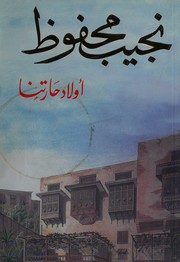 Naguib Mahfouz · 1959Children of the AlleyLvl 7Slow burn
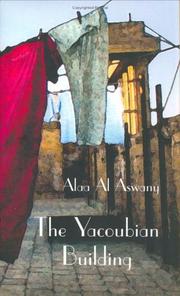 Alaa Al Aswany · 2002The Yacoubian BuildingLvl 4Fast paced