
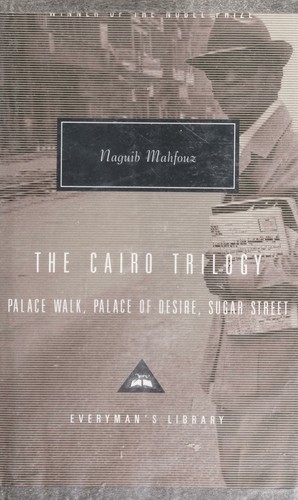
Palace of Desire
Naguib Mahfouz · 1911–2006 · Egypt
Originally Qasr al-Shawq (Arabic) · translated by William Maynard Hutchins, Lorne M. Kenny, and Olive E. Kenny
Why it matters
Five years on, the widowed patriarch courts a lute-playing mistress half his age while his son Kamal loses his faith to Darwin and gives his heart to a woman far above his reach. The Cairo Trilogy's middle volume: appetite and doubt overtaking the household the first book left intact.
At a glance
Same unhurried realism as its predecessor, now carrying a wider cast and Kamal's intellectual crises.
Deep dive
Freed at last from his father's iron household rules once the old man's authority starts slipping, al-Sayyid Ahmad's grown children each go looking for a version of pleasure or purpose he never let them near, and the middle volume of the trilogy tracks exactly what they find.
Written for readers who have finished the book. No plot recap, and nothing here is safe to read first.
Themes & symbolism
Five years after Palace Walk, al-Sayyid Ahmad's absolute rule over his household has softened just enough for his children to test its limits: Kamal, now a university student drawn to Darwin and philosophy, begins quietly dismantling the religious certainties his father's authority was built on, while Yasin, the eldest son, drifts from one affair and marriage to the next with an appetite for pleasure that reads as his own distorted inheritance of the same appetites his father has always indulged in secret. Mahfouz uses the two brothers as opposite responses to the same tyranny, one son abandoning the father's beliefs entirely, the other reproducing the father's worst habits while believing himself entirely unlike him.
Kamal's infatuation with Aïda Shaddad, an aristocratic young woman who treats him as an amusing inferior rather than a suitor, gives Mahfouz his clearest image of a Cairo reorganizing itself along new lines of class and education even as the old certainties Kamal is losing intellectually get replaced by nothing sturdier than unrequited longing. His humiliation at Aïda's hands runs on the same current as his crisis of faith: both are experiences of a young man discovering that the frameworks he trusted, religious and romantic alike, were never built to include someone like him. Mahfouz keeps Kamal's private, interior chapters, dense with Darwin, doubt, and unspoken longing, in constant counterpoint with Yasin's noisy public scandals, so that the same household produces one son who withdraws into thought and another who acts out every appetite in full view of the neighborhood.
Al-Sayyid Ahmad's Houseboat as a Second, Hidden Household
Ahmad's mistress Zanuba, kept on a houseboat entirely separate from the household he rules with such visible severity, becomes the novel's sharpest exposure of the patriarch's hypocrisy once Yasin, unaware of his father's involvement, begins pursuing the same woman and eventually marries her, colliding father and son inside the exact deception the father has spent two decades protecting. Mahfouz stages the discovery less as farce than as a quiet devastation, the household's foundational lie made literally inescapable once it starts running in the family.
The last seal: what actually happens, and why it lands the way it does.
The ending, explained
Fahmy's death in the first volume's street protests hangs over this one as the household's still-unhealed wound, and Mahfouz closes Palace of Desire on a second, unrelated blow: Aisha's husband and both her young sons die of typhoid within the same short span, a catastrophe that leaves al-Sayyid Ahmad's once-untouchable authority looking newly, visibly powerless against a fate no household discipline can regulate. Kamal, meanwhile, resolves his crisis with Aïda not through reconciliation but through disillusion, learning she has married someone else entirely beneath the sophistication he once assigned her, which lets Mahfouz close the volume on the same note as its opening chapters: every character's certainties, religious, romantic, and patriarchal, are eroding at once, just on different schedules.
Where to go next
 Naguib Mahfouz · 1947Midaq AlleyLvl 3Medium pace
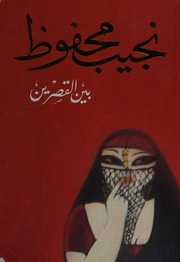 Naguib Mahfouz · 1956Palace WalkLvl 4Medium pace
 Naguib Mahfouz · 1957Sugar StreetLvl 5Medium pace
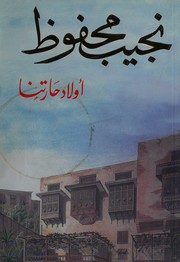 Naguib Mahfouz · 1959Children of the AlleyLvl 7Slow burnNaguib Mahfouz · 1961The Thief and the DogsLvl 6Fast paced
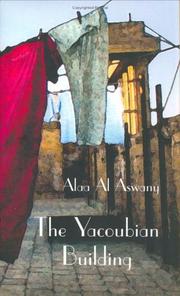 Alaa Al Aswany · 2002The Yacoubian BuildingLvl 4Fast paced