
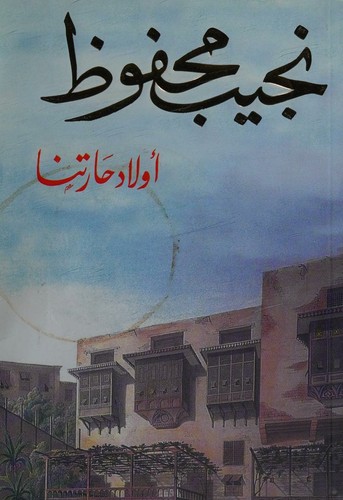
Children of the Alley
Naguib Mahfouz · 1911–2006 · Egypt
Originally Awlad Haratina (Arabic) · translated by Peter Theroux
Why it matters
Five generations of one Cairo alley reenact, thinly veiled, the stories of Adam, Moses, Jesus, and Muhammad under the shadow of a reclusive patriarch named Gebelawi. Banned outright in Egypt and, decades later, the pretext for the extremist's knife that nearly killed Mahfouz.
At a glance
Dense religious allegory spread across five linked novellas demands unpacking who each figure represents.
Deep dive
A neighborhood keeps producing men who promise to finally deliver on its founding patriarch's forgotten justice, and Mahfouz builds an entire allegory of monotheism's history out of watching every single one of them fail in a slightly different way.
Written for readers who have finished the book. No plot recap, and nothing here is safe to read first.
Themes & symbolism
Gebelawi, the wealthy patriarch who founded the alley and then withdrew into an inaccessible mansion at its edge, functions across the novel as an allegory for a certain idea of God, remote, invoked constantly, encountered by almost no one directly, whose original endowment of the alley to its residents has long since been seized by the gangster-overseers who actually run daily life there. Mahfouz structures the entire novel as a repeating cycle: a new figure rises promising to restore Gebelawi's original justice, wins some real victory for the alley's poor, and is eventually absorbed, corrupted, or forgotten by the same system he set out to reform.
Gabal, who leads the alley's snake charmers to a genuine, if partial, liberation from the overseers, and Rifaa, whose obsessive concern with the desperate and possessed rather than earthly power gets him killed by men who cannot use what he offers, map directly onto Moses and Jesus, while Qassem, who succeeds through a combination of persuasion, negotiated authority, and eventual organization, maps onto Muhammad, and Mahfouz keeps each figure recognizably human rather than reverent, ambitious, afraid, capable of real cruelty as well as real justice.
Arafa, the final section's protagonist, replaces prophecy and inherited authority with chemistry and invention, using the same rationalist tools that could liberate the alley from the overseers to instead build the era's most fearsome weapons, and Mahfouz's decision to end the allegory here, with a magician-scientist rather than a religious figure, was read on publication as an argument that science had inherited monotheism's promise of deliverance without yet earning any better a record of using power responsibly than the prophets before it.
A Novel Egypt Would Not Let Print for Decades
Serialized in a Cairo newspaper in 1959, Awlad Haratina was denounced by al-Azhar, Egypt's foremost Islamic authority, as blasphemous for its unmistakable, if never explicitly named, retelling of Judaism, Christianity, and Islam through gangster politics and human failure, and the novel was never published as a book in Egypt during Mahfouz's lifetime, circulating instead through a Beirut edition smuggled back across the border. The controversy followed Mahfouz for the rest of his career and is widely understood as part of what motivated the 1994 stabbing attack that nearly killed him, carried out by an assailant who had likely never read the book himself.
The last seal: what actually happens, and why it lands the way it does.
The ending, explained
Arafa, whose magic-turned-science was meant to free the alley from the overseers' violence for good, ends up killing Gebelawi himself while trying to steal the patriarch's book of secrets, an act the alley immediately misreads as murdering God rather than as the accidental byproduct of overreach it actually was. Arafa is killed in turn, and the alley's residents are left with only rumor and disputed report to explain what happened in Gebelawi's mansion, the same unreliable, secondhand transmission that has shaped every account of Gebelawi across the whole novel. Mahfouz closes not on resolution but on the alley's oldest habit reasserting itself: waiting for the next man who will promise to restore what Gebelawi originally intended, with no more certainty this time than the last that he will actually deliver it.
Where to go next
 Naguib Mahfouz · 1947Midaq AlleyLvl 3Medium pace
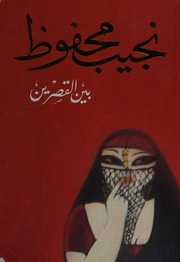 Naguib Mahfouz · 1956Palace WalkLvl 4Medium pace
 Naguib Mahfouz · 1957Palace of DesireLvl 5Medium paceNaguib Mahfouz · 1957Sugar StreetLvl 5Medium paceNaguib Mahfouz · 1961The Thief and the DogsLvl 6Fast paced
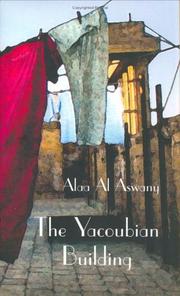 Alaa Al Aswany · 2002The Yacoubian BuildingLvl 4Fast paced