

The Shadow Lines
Amitav Ghosh · b. 1956 · India
Why it matters
Calcutta, Dhaka, and London braid across generations to show how nations and their violent borders are drawn in the mind. Ghosh's meditation on memory, freedom, and the arbitrariness of the lines that divide people.
At a glance
Fragmented, achronological narration across three cities and generations without signposting.
Deep dive
A Bengali family spends two generations telling and half-telling the story of one relative's death in a Dhaka riot, and how long it takes the narrator to learn what a map can't show him about the distance between here and there.
Written for readers who have finished the book. No plot recap, and nothing here is safe to read first.
Themes & symbolism
The narrator reconstructs his family's history out of order and out of place, Calcutta, Dhaka, London, moving between the 1930s and the 1970s on the strength of memory and other people's stories rather than any linear chronology, and Ghosh builds the novel's whole method around a refusal to let geography or time organize the telling the way a conventional family saga would. Tridib, the older cousin whose stories of a house in London first give the narrator his entire imaginative sense of the world beyond Calcutta, is the novel's absent center: a death the family has kept just vague enough that piecing it together becomes the narrator's real education.
Tha'mma, the grandmother born in a Dhaka she still calls home even after decades in Calcutta and even after that home became first East Pakistan and then Bangladesh, wants borders to be real, wants to look down from an aeroplane and actually see the line, and her bewilderment when there's nothing to see is Ghosh's clearest statement of the novel's argument: a border drawn to divide two nations doesn't erase the lived, remembered geography underneath it, it just makes that geography impossible to admit to out loud.
Tridib is killed in a riot in Dhaka triggered by a relic's disappearance from a Kashmir shrine hundreds of miles away, violence that spreads along lines of rumour and religious identity rather than any border a government actually drew, and Ghosh's title concept, the shadow lines, names exactly this: the real lines that get people killed are rarely the ones printed on a map, and the ones printed on a map rarely match the lines that actually connect or divide people's lives.
May Price and the Guilt No One Would Name
May, the English woman Tridib loved and who was present in Dhaka the night he died trying to rescue Tha'mma's elderly uncle from a mob, has spent years privately convinced she goaded Tridib into the danger that killed him, and her eventual confession to the narrator is the scene the entire nonlinear structure has been withholding: not a plot twist so much as the single fact the family's decades of careful, partial retelling were always circling without landing on.
An Uncle Left Behind by Two Countries
Jethamoshai, Tha'mma's uncle who refuses to leave the Dhaka house even after Partition makes him a minority in what used to simply be his own city, embodies the generation the new border caught flat-footed: too old and too rooted to migrate on schedule, he becomes the reason Tridib is in the streets the night of the riot at all, an old man's stubborn attachment to a house directly producing the novel's central death.
The last seal: what actually happens, and why it lands the way it does.
The ending, explained
May finally tells the narrator what happened that night in Dhaka: Tridib went into the mob to pull Jethamoshai to safety, and the crowd killed him instead, a death May has spent years believing she provoked by insisting they go rescue the old man in the first place. The narrator's slow reconstruction across the whole novel, family gossip, half-finished sentences, a childhood spent imagining Tridib's London stories as more real than his own street, finally resolves into this one plain fact, and Ghosh lets the narrator and May reach something like intimacy through the shared, belated grief rather than through any romance the earlier chapters might have set up. The freedom the title's shadow lines have been circling turns out to be exactly this: understanding, finally, what actually happened, rather than what a border or a family's silence allowed everyone to assume.
Where to go next
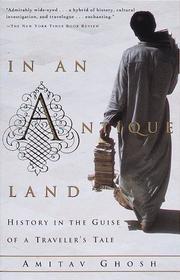 Amitav Ghosh · 1992In an Antique LandLvl 5Slow burn
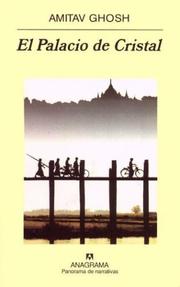 Amitav Ghosh · 2000The Glass PalaceLvl 4Medium pace
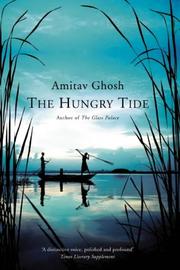 Amitav Ghosh · 2004The Hungry TideLvl 4Medium pace
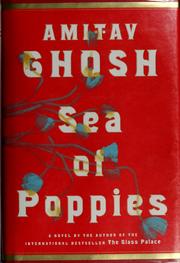 Amitav Ghosh · 2008Sea of PoppiesLvl 6Fast paced
 Salman Rushdie · 1981Midnight's ChildrenLvl 8Medium pace
 Vikram Seth · 1993A Suitable BoyLvl 3Medium pace