
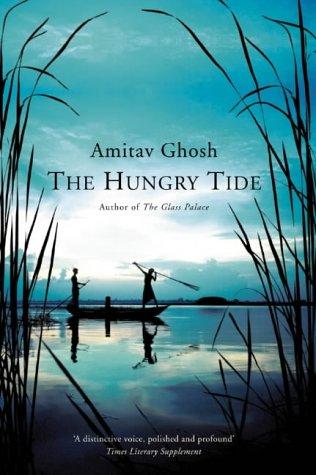
The Hungry Tide
Amitav Ghosh · b. 1956 · India
Why it matters
A marine biologist and a translator navigate the Sundarbans' tidal mangrove islands, where humans, tigers, and dolphins compete for the same shifting ground. Ghosh's ecological turn, blending adventure with environmental urgency.
At a glance
Accessible adventure-novel pacing with interwoven ecological and folkloric material.
Deep dive
An American cetologist chasing river dolphins into the Sundarbans hires a fisherman who can barely exchange a word with her but somehow always knows exactly where the water is about to turn against them.
Written for readers who have finished the book. No plot recap, and nothing here is safe to read first.
Themes & symbolism
Piya Roy's scientific mission, tracking the Irrawaddy dolphins of the Sundarbans, depends entirely on Fokir, a fisherman who can't read English or a map but navigates the tide country's shifting channels by a knowledge Piya's instruments can't replicate, and Ghosh builds their working partnership, conducted almost entirely without a shared language, into the novel's argument that expertise takes forms Western science doesn't have a category for.
Kanai Dutt, a Delhi translator drawn to the Sundarbans to read his late uncle Nirmal's notebook, gives the novel its historical spine: Nirmal's account of the 1979 Morichjhapi massacre, in which West Bengal's government violently evicted Bangladeshi refugees who had settled on land officially reserved for tiger conservation, forces Kanai, and the reader, to weigh a globally admired ecological project against the specific human community it was built by erasing.
The Sundarbans itself, a mangrove delta that redraws its own geography with every tide, that can drown a village overnight and grow new land somewhere else, becomes Ghosh's argument that the human dramas playing out on it, Piya's research, Nirmal's guilt, Fokir's precarious livelihood, are all subject to a scale of change indifferent to any of them. Nirmal's own history as an idealist Marxist poet turned schoolmaster, radicalized decades earlier and still quietly ashamed of how little his convictions ever cost him personally, gives Kanai's inherited notebook its urgency: an old man finally acting on principle only once, at Morichjhapi, when it was already too late to save anyone.
Morichjhapi: The Massacre Conservation Made Possible
The real 1979 killings on Morichjhapi island, where police besieged and starved thousands of Bangladeshi Hindu refugees who had settled on protected forest land, sit at the emotional center of Nirmal's notebook, and Ghosh's decision to make a celebrated tiger reserve's origin story include a government massacre of the rural poor is the novel's sharpest challenge to conservation as an unambiguous good.
A Language Barrier That Becomes the Plot
Piya speaks no Bengali and Fokir no English, so Kanai's role as translator between them carries real narrative weight rather than functioning as convenience, and the novel tracks how much genuine understanding Piya and Fokir build anyway, through gesture, shared attention to the water, and each other's competence, suggesting a fluency that doesn't run through words at all.
The last seal: what actually happens, and why it lands the way it does.
The ending, explained
The cyclone that closes the novel forces the choice Piya and Fokir's working partnership has been quietly building toward: when the storm strands them on a mudbank, Fokir shields Piya's body with his own, and the mast he's lashed her to survives the surge while he doesn't. Kanai, left onshore, finishes Nirmal's notebook and its account of Morichjhapi in full. Piya, changed by a death she can't fully explain to anyone who wasn't there, decides to stay on in the Sundarbans rather than return to her research life abroad, funding a dolphin conservation program that employs local fishermen, Fokir's own family among them, turning a debt she can't repay into work she can actually do.
Where to go next
 Amitav Ghosh · 1988The Shadow LinesLvl 7Slow burn
 Amitav Ghosh · 1992In an Antique LandLvl 5Slow burn
 Amitav Ghosh · 2000The Glass PalaceLvl 4Medium pace
 Amitav Ghosh · 2008Sea of PoppiesLvl 6Fast paced
 Salman Rushdie · 1981Midnight's ChildrenLvl 8Medium pace
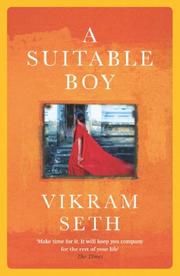 Vikram Seth · 1993A Suitable BoyLvl 3Medium pace